

A curious child opening a cabinet or a teenager finding a hidden key feels like a small oversight until something gets broken or goes missing. Traditional locks require drilling and keys that get copied or lost, turning simple storage into a permanent hassle.
Smart cabinet locks replace that physical key with digital access you can grant, track, and revoke instantly. They secure everything from kitchen knives and liquor cabinets to home offices and medicine drawers without permanent damage. We analyzed the market to find options that balance security with the practical needs of a busy home.
Our overall pick for smart cabinet locks is the Anweller Smart Cabinet Lock. It offers multiple ways to unlock, including a phone app and RFID cards, making it easy to manage access for different family members. Our top picks are just below.
Our Top Picks

Pros
- Adhesive mount works on many cabinet surfaces without tools
- Multiple unlock methods reduce need for physical keys
- Long battery life limits frequent replacements
- Fits double door setups with included accessory
Cons
- App setup required before any use
- Adhesive bond may weaken over time on some surfaces
- Alexa control needs separate gateway purchase
This cabinet lock delivers straightforward security for household storage spaces through adhesive mounting and several access options. It avoids drilling so furniture stays intact in rentals and owned homes alike.
Multiple unlock choices support daily routines like quick access to kitchen items while keeping contents safe from kids. The design also works well for securing liquor or file storage without visible hardware.
Worth noting before buying: the adhesive may not suit all cabinet materials and could require periodic checks for hold strength. Battery changes still demand manual access to the unit.
It suits renters and homeowners who want basic cabinet protection without modifications.
Installation starts with cleaning the surface for best adhesive hold. The lock fits most wood cabinets up to 1.2 inches thick in standard homes or apartments.
- Choose stick-on for quick no-tool setups on smooth doors.
- Use screws for added strength on high-use kitchen drawers.
- Double door cabinets need the included accessory to bridge the gap.
- Plan placement to allow easy RFID card reach during normal use.
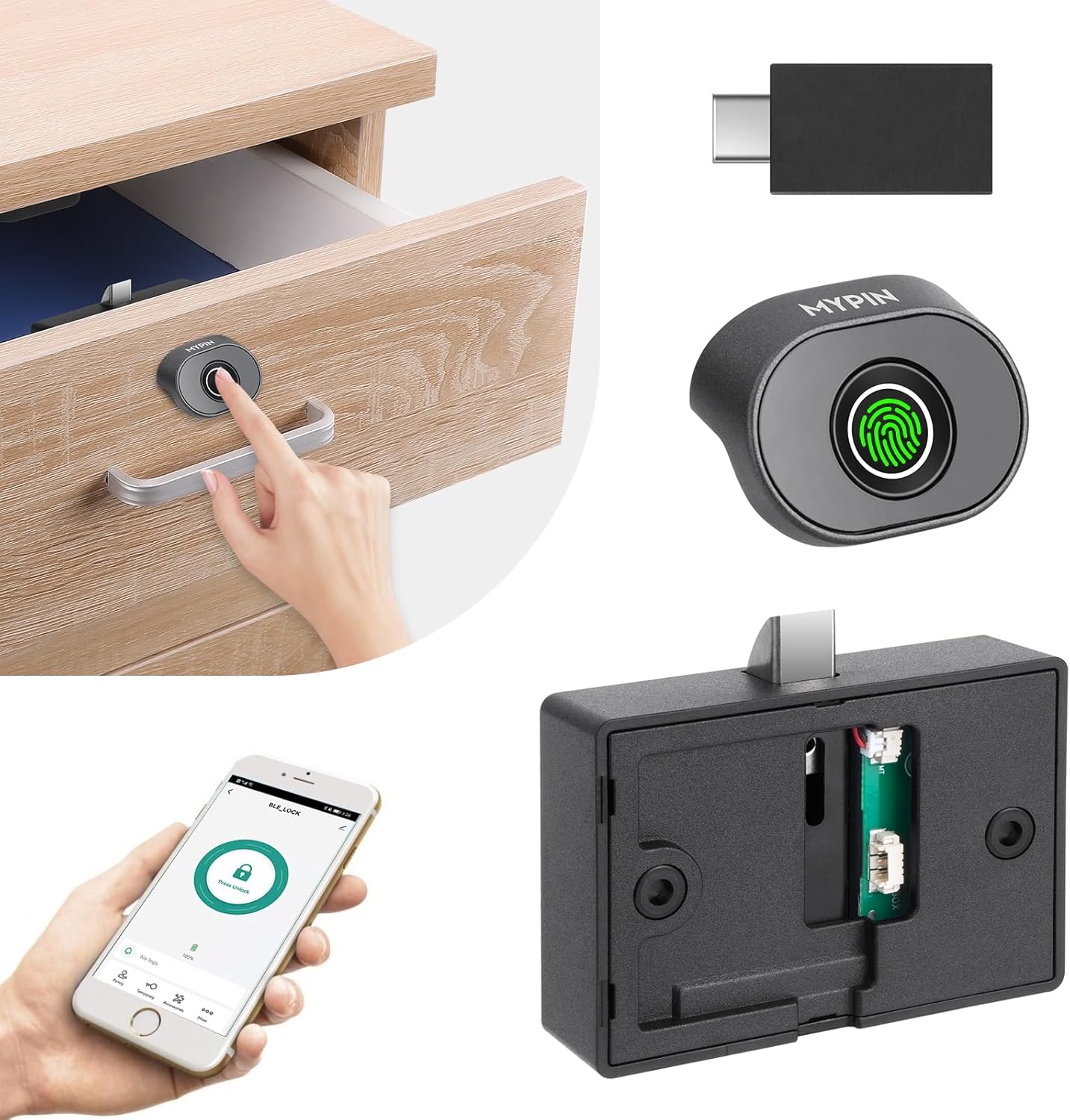
MYPIN Fingerprint Cabinet Lock for Securing Home Drawers and Cabinets
Pros
- Multiple unlock methods prevent being locked out
- Metal build strengthens cabinet door security
- Battery power lasts a year under normal use
- Simple setup works on standard wooden doors
Cons
- Fits only doors between 0.47 and 0.62 inches thick
- Logging features require the app to function
- Batteries must be replaced periodically
This cabinet lock offers a practical way to add basic security to household furniture without complex wiring. It fits wooden doors in the specified thickness range and supports fingerprint or app access for everyday use.
The design works well for securing items like important papers or personal belongings in a home office. Family members can share entry through the app while the system logs activity for reference.
Worth noting before buying is the need for compatible door thickness and separate batteries. It does not auto-lock and relies on manual setup for fingerprints first.
This product suits homeowners looking to upgrade basic cabinet security in standard wooden furniture.
Measure your cabinet door thickness first to confirm it falls between 0.47 and 0.62 inches. Thinner doors need shorter screws while thicker ones may not fit at all.
- Drill a hole for the lock body on single wooden doors only
- Align the strike plate on the cabinet frame before final tightening
- Set the administrator fingerprint during initial setup to enable other users
- Position the lock away from edges that see heavy daily contact
Apartment renters benefit from this reversible install since no permanent changes are needed. Wood frame homes allow straightforward drilling compared to metal cabinets.

Pros
- Supports up to 100 fingerprints for multiple household members
- Offers three unlock methods including emergency USB key
- Installs on wooden cabinet doors with basic screws
- Warns when battery power runs low
Cons
- Fits only specific door thicknesses from 0.47 to 0.62 inches
- Allows just one password to be programmed
- Needs battery replacement every year on average
This cabinet lock gives homeowners a practical way to secure storage spaces without needing keys or apps. I find the fingerprint option convenient for repeated daily use on cabinets holding sensitive items.
It works well in home offices or bedrooms where quick access matters. The USB key backup proves useful if batteries fail during an outage.
The main trade-off is its restriction to certain door thicknesses which may require adjustments on thinner panels. Worth noting before buying that it suits single-door wooden cabinets best.
Overall this product fits homeowners needing simple added security on existing storage furniture.
Measure your cabinet door thickness first since this lock requires doors between 0.47 and 0.62 inches for a secure fit. Thinner doors may need shorter screws while thicker ones will not work without modification.
- Align the lock case and striking plate on the inside of the door before drilling
- Route the connecting wire through the door for keypad connection
- Test the mechanism after installation on wood-frame cabinets
- Consider apartment rentals where drilling may need landlord approval
- Position for easy fingerprint access in daily home use

Pros
- Installs on smooth surfaces without any tools or holes
- Holds firmly under normal daily use and tugging
- Works on multiple appliances and storage spots around the house
- Removes cleanly for renters who need to move
Cons
- Adhesive fails on textured or painted surfaces over time
- Chain length limits use on wider doors or drawers
- Requires a key each time for adult access
These adhesive locks offer a simple way to add basic child safety to household doors and drawers. They stick in place quickly and hold under everyday pulling from small hands.
I see them working well on fridges in kitchens where kids reach for snacks or on cabinets storing cleaners. The rubber-coated chain avoids scratches during regular opening and closing.
Worth noting before buying: the adhesive needs perfectly smooth surfaces to stay secure long term. Textured finishes or heavy daily use can cause it to loosen.
This option suits homes with young children who need straightforward barriers on storage areas.
These locks need clean flat surfaces for the adhesive to grip. I recommend wiping doors or drawers with alcohol first in kitchens or bathrooms.
- Works on refrigerators in rental apartments without drilling
- Sticks to wood cabinets in family homes but may slip on glossy paint
- Apply pressure for 30 seconds during install for better hold
- Test the lock after 24 hours before relying on it fully
- Suits new setups on smooth appliances better than old worn surfaces
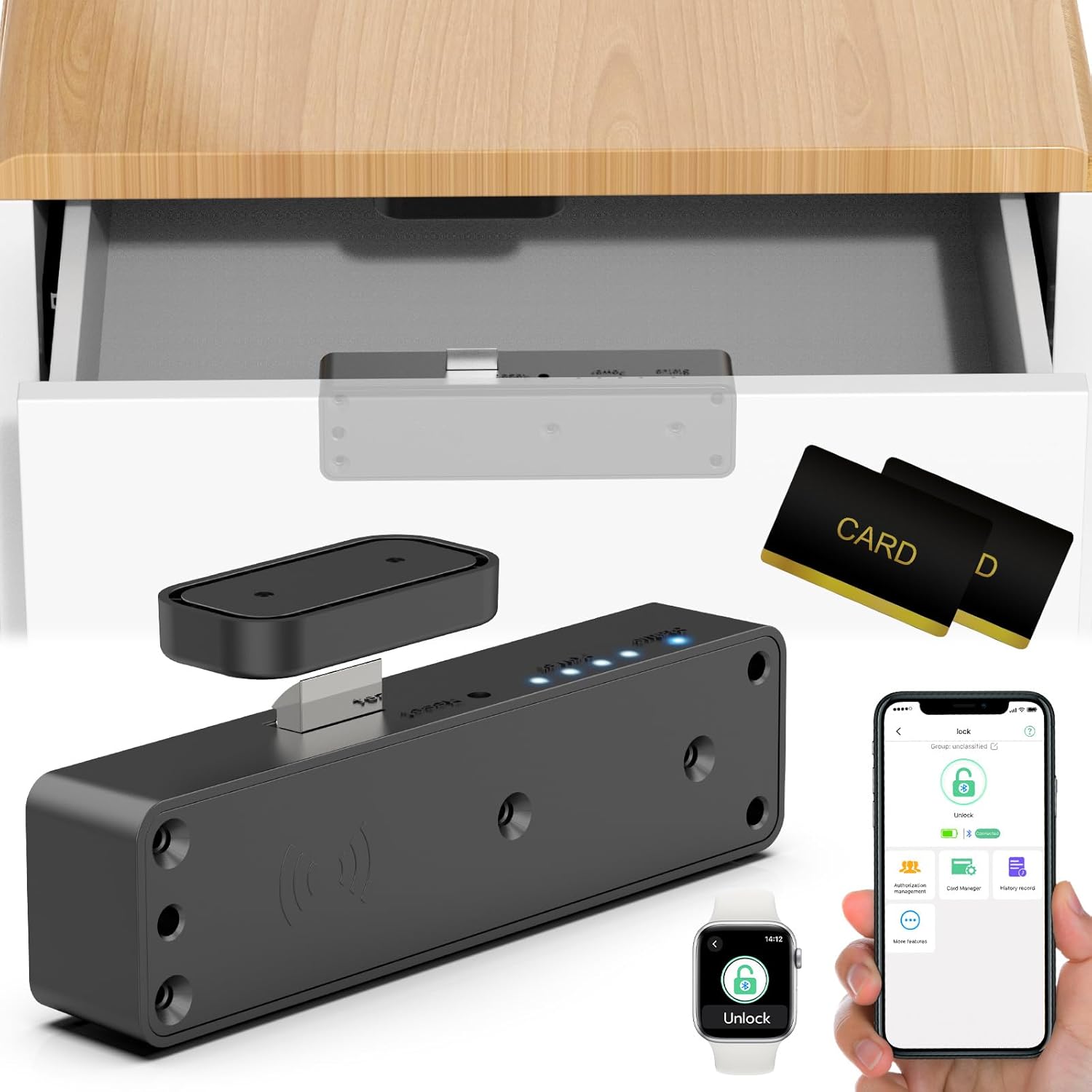
Pros
- Installs inside furniture with no drilling required
- Unlocks in seconds using app or RFID cards
- Switches to unlocked mode during low battery
- Fits various cabinet sizes with side plate option
Cons
- Needs battery changes every year or so
- Adhesive may fail on some cabinet surfaces
- Works only on indoor furniture applications
This lock mounts inside cabinets to control access to contents while staying out of sight. It works well for securing items like liquor or medications in shared homes.
The app allows remote permission sharing for family members. Multiple unlock options reduce fumbling with keys during daily use.
The main trade-off is reliance on batteries that must be replaced when low. It also needs a compatible surface for stable mounting.
I recommend this for homes with kids or shared spaces needing discreet storage control.
Measure the cabinet interior first to confirm fit before purchase. This lock suits wood or laminate surfaces common in apartments and homes.
- Clean the mounting area thoroughly for best adhesive hold.
- Use screws for heavier doors instead of tape alone.
- Align the lock and plate carefully on double door setups.
- Test the mechanism after install before loading items inside.
New installations work best on empty cabinets while replacements may need minor adjustments to existing hardware.
Choosing the Right Smart Cabinet Locks
A lock for a cabinet or drawer needs to be secure enough to deter unwanted access but convenient enough that you will actually use it every day. The best choice depends less on raw strength and more on how it fits into your daily routine and who needs to get in.
Installation and cabinet compatibility
The first hurdle is getting the lock onto your furniture without ruining it. Renters and anyone with expensive cabinetry need a solution that sticks securely but can be removed cleanly later. Adhesive-backed models solve this, but only if the surface is clean and smooth.
For permanent installations on a gun safe or a dedicated file cabinet, screw-in mounts provide a stronger hold. Check the lock’s design to see if it fits inside the cabinet frame or sits on the outside, as this determines which doors and drawer styles it will work on.
Access methods and user management
Think about who needs access and how often. A fingerprint reader is fast for a single user but cumbersome for granting temporary access to a guest or cleaner. An app-based lock lets you send a digital key that expires, while an RFID card is a physical token you can hand to a family member.
Some locks support only a handful of users, which is fine for a personal liquor cabinet. Others can manage dozens, which is better for a shared office supply closet. Consider whether you need an audit trail showing who opened the cabinet and when, a feature more common in app-connected models.
Power and backup access
A lock is only useful if it opens when you need it to. Battery life varies widely based on how often the lock is used and the technology involved. Bluetooth locks tend to use more power than standalone RFID or fingerprint models.
A clear low-battery warning is non-negotiable. Look for a lock that alerts you with enough time to swap batteries before it fails. Also, check for a backup access method, like a physical key or a USB port for emergency power, so you are not locked out of your own documents or supplies.
Durability and security level
Not every cabinet holds items of equal value. A lock for a childproofed kitchen drawer does not need the same heft as one securing a firearm or sensitive documents. The mechanism’s material, whether plastic or metal, and its resistance to prying or tampering should match the contents.
For high-security needs, a metal-bodied lock with a strong deadbolt is worth the more involved installation. For general privacy and child safety on standard cabinets, a well-designed adhesive lock provides sufficient deterrence without overcomplicating the setup.
Once you know what you are storing, who needs entry, and how permanent the installation should be, the right type of lock becomes clear. The goal is to add control without adding daily frustration.
Why You Should Trust Us
Our recommendations are based on deep market research, not hands-on testing. We analyze manufacturer specifications, cross-reference industry standards for durability and security, and scrutinize product designs for real-world usability. Each product is assessed through our SHU Score system, which weighs factors like installation flexibility, access methods, power management, and build quality against typical home scenarios.
We prioritize clear information over marketing claims, focusing on how these locks perform in everyday situations like securing a home office, childproofing a kitchen, or controlling access to a liquor cabinet. Our goal is to give you the practical insights needed to make a confident choice.
Final Thoughts
The right smart cabinet lock adds a layer of controlled access without becoming a daily obstacle. It comes down to matching the lock’s capabilities to the value of what you are securing and the convenience you expect.
For most households looking for a versatile, keyless solution, the Anweller Smart Cabinet Lock is our top choice. Its five unlocking methods, including app control and RFID cards, make it easy to manage access for different people, and its hidden, adhesive installation works on most cabinets without damage. For those prioritizing a biometric option, the MYPIN Fingerprint Cabinet Lock offers fast, keyless entry with a backup USB key, suitable for personal storage like a home office or gun safe.
If you need to secure multiple standard cabinets around the house, like those in a kitchen or bathroom, a simple adhesive lock like the KIZZHISI model provides effective childproofing at a lower entry point. Choosing a lock that fits your specific need means one less thing to worry about, letting you secure your belongings and focus on what matters.
Frequently Asked Questions
Can smart cabinet locks be installed without drilling?
Many models use strong adhesive backing for a completely tool-free installation that does not damage wood or laminate surfaces. This makes them ideal for renters or anyone who does not want to permanently alter their furniture. Ensure the surface is clean and dry for the best hold.
What happens if the battery dies?
A quality lock will give you a low-battery warning days or weeks in advance. Most have a backup access method, such as a physical key, a USB port for temporary external power, or a feature that defaults to unlocked when the battery is critically low, preventing you from being locked out.
Are fingerprint locks reliable for cabinet use?
Modern fingerprint readers are fast and accurate for personal storage, unlocking in under a second. They work well for a single user or a small family group accessing a private cabinet. For shared spaces where you need to grant temporary access, an app or RFID-based lock offers more flexibility.
How do I choose between Bluetooth and RFID?
Bluetooth locks connect to a phone app, allowing remote access, user permission management, and an activity log. RFID locks use a card or fob for quick tap-to-open access without a phone, which can be simpler for children or guests. The choice depends on whether you value remote features or straightforward physical access.
Can one lock work on different cabinet types?
Most adhesive locks are designed to work on a range of standard cabinet doors and drawers, provided the surfaces are flat and non-porous. Check the product specifications for thickness limits and mounting requirements, especially for frameless cabinets or drawers with unusual latches. For specialized storage, like a gun safe, a dedicated lock with a metal chassis is a better fit.


Write Your Review
No reviews yet. Be the first to share your experience!