

Swapping out a deadbolt is a hard no for a lot of renters, and even owners balk at the idea of drilling their door or losing the key they already carry. Most smart locks ask you to replace the whole thing, which is more change than many people want.
The best retrofit smart locks solve that by mounting over your existing deadbolt, so the outside of your door and your original key stay exactly the same. We went through the current options to find ones that install in minutes and still feel solid day to day.
Our overall pick for best retrofit smart locks is the Yale Approach Retrofit Lock. It keeps your existing key and deadbolt while adding app control and auto lock, so you get keyless convenience without changing how your door looks or works. See the full list below to find the right option for your property.
Our Top Picks
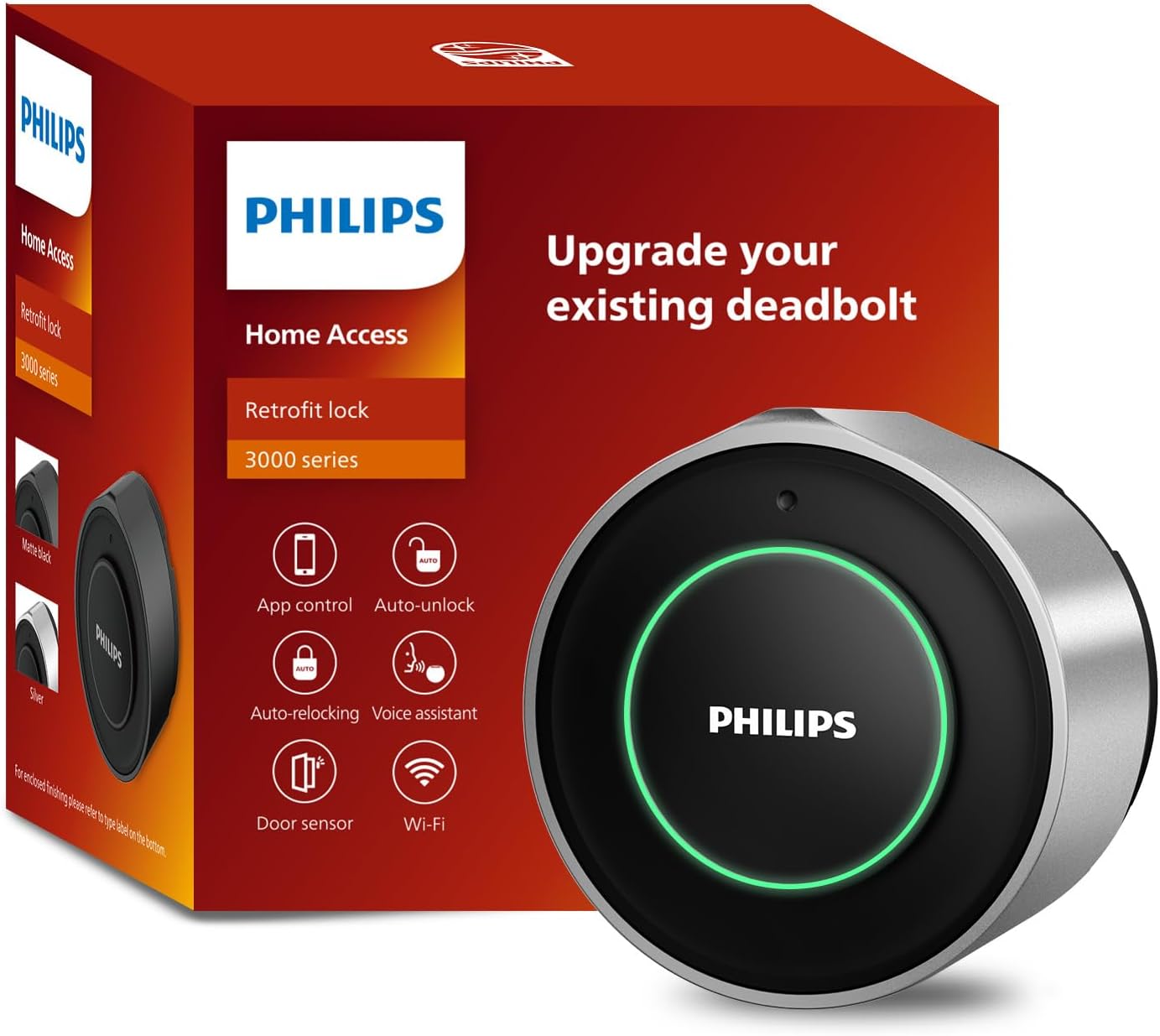
Philips 230X Retrofit Smart Lock for Existing Deadbolts with Auto Lock and App Control
Pros
- Adds remote lock control from any location.
- Fits over existing deadbolt with minimal changes.
- Auto lock prevents unsecured doors after exit.
- Voice control frees hands during daily routines.
Cons
- Needs steady Wi-Fi for all remote functions.
- Fit varies on older or nonstandard deadbolts.
- Battery changes required every few months.
This retrofit lock turns a standard deadbolt into a smart one that supports phone control and automatic locking. It keeps the original hardware and keys intact while adding everyday convenience for front door security.
Homeowners gain alerts for entries and exits, which helps track kids returning from school or monitor package deliveries at the porch. The auto-lock feature secures the door after you leave without extra steps.
The main trade-off is dependence on a reliable Wi-Fi signal for full remote use. App alerts and voice commands still function only when the connection holds steady.
This product suits renters and owners who want to upgrade security on standard doors without full replacement.
Measure your deadbolt before purchase since this unit fits most standard models on wood or metal doors. Apartments with thin frames may need extra alignment checks during setup.
- Confirm the deadbolt throw length matches the retrofit housing.
- Install on a flat surface to avoid binding during lock cycles.
- Replace batteries after setup to start with full power.
- Test manual key operation before relying on the app.
- Position near a strong Wi-Fi signal for consistent remote access.

Pros
- Installs in minutes using only a screwdriver.
- Retains your current deadbolt and keys as backup.
- Compact design fits inside without altering door look.
- App allows locking from anywhere with the bridge.
Cons
- Needs separate Yale Connect for full remote app use.
- Requires periodic battery replacement inside the unit.
- Works only on doors with existing deadbolts.
The Yale Approach adds app control to an existing deadbolt by mounting inside the door. This keeps your original keys and hardware in place for basic use.
It suits homes where you need to secure the front door after deliveries or check on entries while out. The auto-lock helps when leaving with packages or kids in tow.
The main trade-off here is the extra Yale Connect bridge required for remote features from outside the home. Without it the lock stays local only.
This product suits renters or homeowners who want minimal door changes and value keeping physical keys on hand.
Most standard wood or metal doors work well for this retrofit. Apartments with thin frames may need extra checks on clearance before starting.
Consider your door type first. Replacement situations differ from new installs where no prior deadbolt exists.
- Measure inside door thickness to confirm fit.
- Use a screwdriver only for the full process.
- Ensure space for the unit near the existing lock.
- Test the mechanism after mounting to avoid binding.
- Plan for the Yale Connect placement near a power outlet.

Pros
- Works with current deadbolt without full replacement.
- Allows phone app control from any location.
- Supports multiple fingerprints and codes for household use.
- Installs in minutes on most standard doors.
Cons
- Needs stable WiFi signal near the door.
- Fingerprint scanner struggles with wet fingers.
- Requires periodic battery replacement.
This smart deadbolt retrofit provides straightforward remote access for homeowners who want to manage entry without replacing their existing lock.
It supports daily scenarios like monitoring the front door during package deliveries or granting access codes to family members and service providers. The auto-lock feature helps secure the home after someone enters through the door.
The main trade-off is dependence on a consistent WiFi connection for full remote features. Without it some functions become unavailable until restored.
This product suits homeowners with standard single-cylinder deadbolts seeking basic smart upgrades over full lock replacement.
Installation works best on standard single-cylinder deadbolts already in place. It fits most wood-frame or metal doors without major changes.
- Measure your current deadbolt before purchase to confirm compatibility.
- Apartment renters should verify lease rules on door modifications first.
- New installations may need extra time compared to simple replacements.
- Ensure the interior side has enough space for the added components.

Pros
- Allows remote checks on door status from anywhere.
- Supports easy code sharing for guests without key copies.
- Installs with basic tools on standard doors.
- Connects directly to Wi-Fi without extra devices.
Cons
- Requires a stable Wi-Fi signal near the door.
- Touchscreen may need cleaning in dusty areas.
- Auto-unlock can trigger from nearby locations.
This smart deadbolt delivers solid remote control for everyday front door security without needing extra hubs. It handles basic monitoring and access sharing in a straightforward way that fits most homes.
The geofence feature helps with hands-free entry after work or errands. Real-time alerts notify you if the door stays ajar during package drop-offs or when children head out.
One trade-off is the need for consistent Wi-Fi near the entryway to keep alerts reliable. It also lacks built-in backup power for outages.
This lock suits homeowners replacing existing deadbolts who want simple app-based control over their main entry point.
Measure your current deadbolt hole and door thickness first. This model fits most standard wood or metal front doors with a screwdriver only.
- Check alignment on older doors before starting to avoid extra drilling.
- Use the app guide for step-by-step visuals during the process.
- Replace the entire unit if switching from a non-smart deadbolt.
- Test the latch and strike plate fit on apartment rental doors.
- Confirm Wi-Fi reaches the door area after install for full function.

Pros
- Supports remote locking from any location
- Fingerprint entry speeds up daily access
- Auto lock feature prevents unsecured doors
- Multiple methods reduce lost key problems
Cons
- Needs steady WiFi for remote functions
- Install may be complex on older doors
- Requires regular battery monitoring
This smart lock provides remote access to monitor and control the front door from any location. It supports fingerprint unlocking and app alerts tied directly to daily home routines like checking on deliveries.
Remote monitoring helps track door activity while at work. Fingerprint recognition allows quick entry for family members without fumbling for keys during busy mornings.
The main trade-off here is dependence on a reliable internet connection for full remote features. Without it the lock still works locally but loses alerts and app control.
This product suits homeowners in stable WiFi homes seeking straightforward keyless options for front door security.
Check your door thickness and frame type before purchase. Wood-frame doors often need extra reinforcement for a secure fit while metal doors may require different screws.
New installations demand precise hole alignment. Replacement jobs on existing deadbolts are simpler but verify the backset matches your current setup.
- Apartments with thin doors may need additional brackets for stability
- Wood doors benefit from pilot holes to avoid splitting
- Always confirm the lock fits standard 1-3/8 to 2 inch thicknesses
- Renters should get landlord approval before drilling
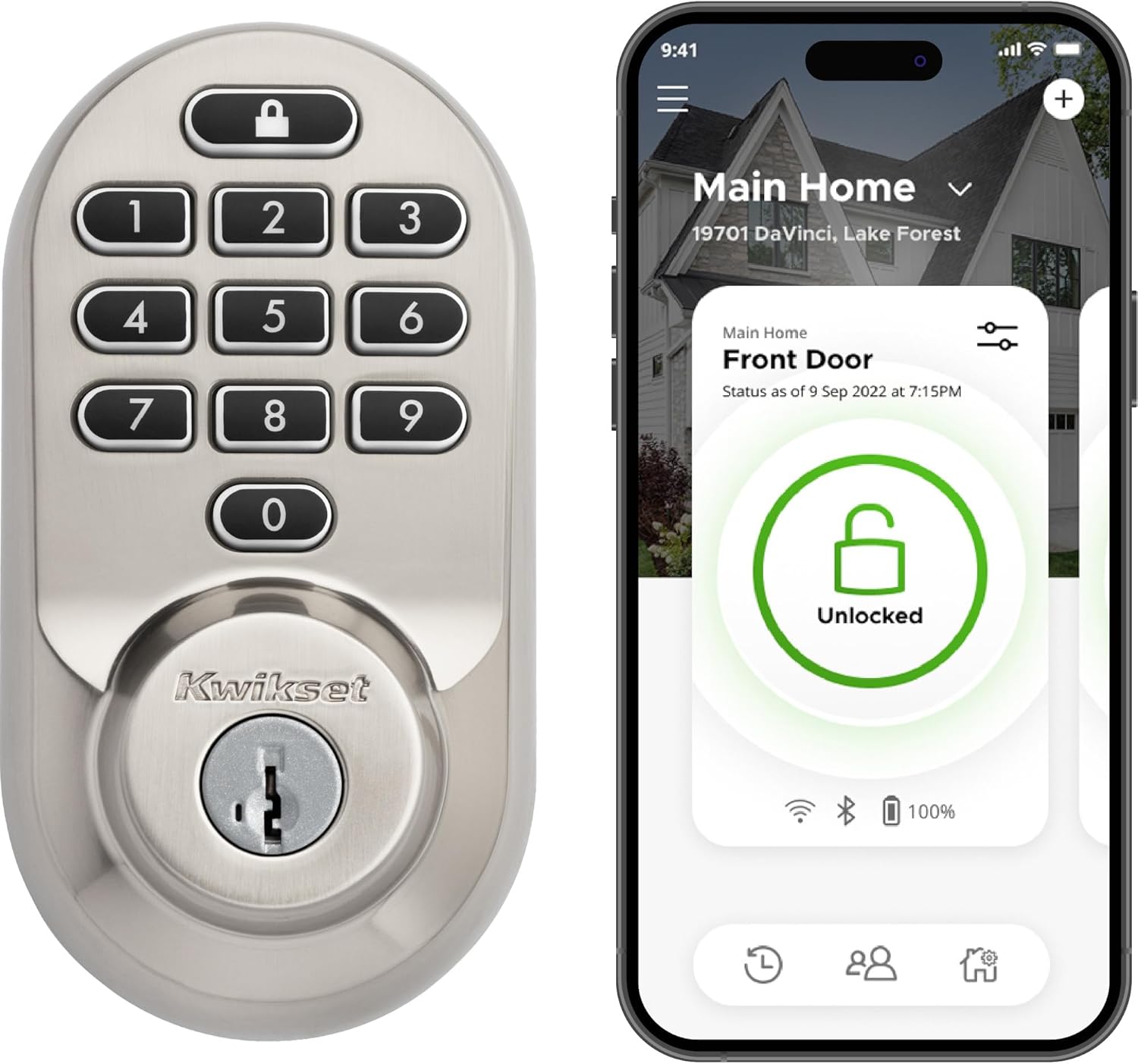
Pros
- Installs quickly with a screwdriver.
- Controls lock from anywhere via Wi-Fi.
- Handles up to 250 access codes easily.
- Re-keys without calling a locksmith.
Cons
- Needs steady Wi-Fi for remote features.
- Batteries require occasional replacement.
- Keypad visibility drops in direct sun.
This smart deadbolt delivers straightforward remote control for everyday front door security. It supports keyless entry and app alerts that fit real situations like checking on package deliveries or securing the house after kids come home from school.
Geofencing unlocks the door as you approach with groceries in hand. The system sends notifications for unusual activity and supports many codes for regular visitors or service workers.
The main trade-off is reliance on a solid Wi-Fi signal. Without it remote functions stop working though the keypad still operates locally.
This lock fits homeowners replacing an existing deadbolt who want app control without added devices.
Measure your door thickness first. This lock fits most standard doors from 1-3/8 to 2 inches thick but confirm the backset matches your current setup before starting.
New installs require drilling for the deadbolt if none exists. Replacement jobs usually finish in minutes with only a screwdriver.
- Check door material. Wood frames accept it readily while metal doors may need extra tools.
- Apartment renters should verify lease rules on modifications before drilling.
- Align the latch carefully during install to avoid binding later.
- Test the keypad and app connection immediately after setup.
Buying Guide for Retrofit Smart Locks
A retrofit lock lives or dies on a few practical points, since it has to work with hardware you already own rather than replace it. Getting these right is the difference between a five minute upgrade and a frustrating return. Here are the key things worth checking before you buy.
Deadbolt compatibility
A retrofit lock only works if it fits the thumb turn and deadbolt you already have, and odd or older hardware is where most fail. A lock that does not grip your turn properly will jam or slip.
Check the brand’s compatibility list and measure your existing deadbolt before buying. Because these mount over your current hardware, smart locks built for easy DIY installation make a retrofit deadbolt upgrade a quick job.
How you unlock
Most retrofit models lean on an app, since they keep the outside hardware untouched and have no room for a keypad. That is fine until your phone dies or a guest needs in.
Decide whether app only access works for your household or you need another way in. If you live in the Apple world, retrofit locks that support Apple Home Key let you tap a phone for keyless entry.
Auto lock and sensors
The big draw of a retrofit lock is letting it lock the door for you, but a clumsy sensor either misses the close or fires too early. A door left unlocked defeats the whole point.
Look for a reliable door position sensor and an adjustable auto lock delay. A good smart lock app should also show you the current state at a glance and log every open.
Battery life and backup
Retrofit motors work a little harder turning your existing deadbolt, which can drain batteries faster than a purpose built lock. A dead lock with no fallback is a real problem.
Check the rated life, look for a low battery alert, and keep your original key as backup. Owners tired of swaps prefer models with longer battery life, which keeps a retrofit smart lock running for months.
Once you confirm it fits your deadbolt, suits how you want to get in, and lasts on a charge, a retrofit lock is one of the simplest smart upgrades you can make. The rest comes down to your door.
Why You Should Trust Us
Our team evaluates smart locks through detailed analysis of manufacturer specifications, safety certifications, and aggregated user data. The SHU Score rates each model on build quality, documented certifications such as ANSI and BHMA, and practical usability factors.
We cross-reference independent testing reports and avoid any claims based on direct product handling. This research-driven method keeps recommendations grounded in verifiable information rather than marketing claims.
Final Thoughts
Picking the right retrofit lock comes down to your door, your living situation, and how much you want to change. Renters and anyone who likes their current key lean one way. People who want fingerprint entry or a fully new look may be better off replacing the deadbolt entirely.
For most people, the best retrofit smart locks hit the sweet spot, and the Yale Approach Retrofit Lock is the easiest to live with. It keeps your key, installs with just a screwdriver, and adds app control, so the whole household gets keyless access without changing the outside of the door.
FAQs
Can retrofit smart locks work on rental doors?
Retrofit smart locks attach without altering exterior hardware so they suit most rental agreements. Confirm lease terms allow interior modifications before installation. Keep the original parts stored for move-out.
Do you need Wi-Fi for basic operation?
Basic keypad or fingerprint entry functions without Wi-Fi on all reviewed models. Remote app features stop working until the connection returns. Local codes continue during outages.
How do auto-lock settings affect daily routines?
Auto-lock timers secure the door after a chosen delay so users avoid manual checks. Busy households set shorter times to match frequent exits. Longer delays reduce accidental locks during loading tasks.
Is it better to choose models with built-in Wi-Fi?
Built-in Wi-Fi removes the need for extra hubs and simplifies setup for most homes. Models without it require additional devices that add cost and points of failure. Verify router range reaches the door location first.
What is the typical battery replacement schedule?
Batteries last several months depending on usage frequency and notification volume. Replace them every six months as routine maintenance. Keep spares on hand to avoid lockouts.


Write Your Review
No reviews yet. Be the first to share your experience!