

You pull the door shut behind you, hear the latch click, and a minute later you cannot remember if you turned the key. That small moment of doubt is what auto-lock features are designed to eliminate, securing the door on a timer so you never have to second-guess it again.
We evaluated the current market for smart locks with automatic locking, looking for models that combine this set-and-forget reliability with the core security and access control a front door demands.
Our top choice is the Schlage Encode Smart Wi-Fi Deadbolt. It delivers a straightforward, hub-free connection for remote management and a proven auto-lock function that works without complicating your routine. Our top picks are just below.
Our Top Picks
Pros
- No extra hub needed for direct phone control.
- Multiple unlock options reduce reliance on physical keys.
- Includes matching handle for full front door replacement.
- Auto-lock timer prevents leaving the door unsecured.
Cons
- Requires eight AA batteries that are not included.
- Door thickness must match 1-3/8 to 1-3/4 inches.
- Voice features need separate Alexa or Google devices.
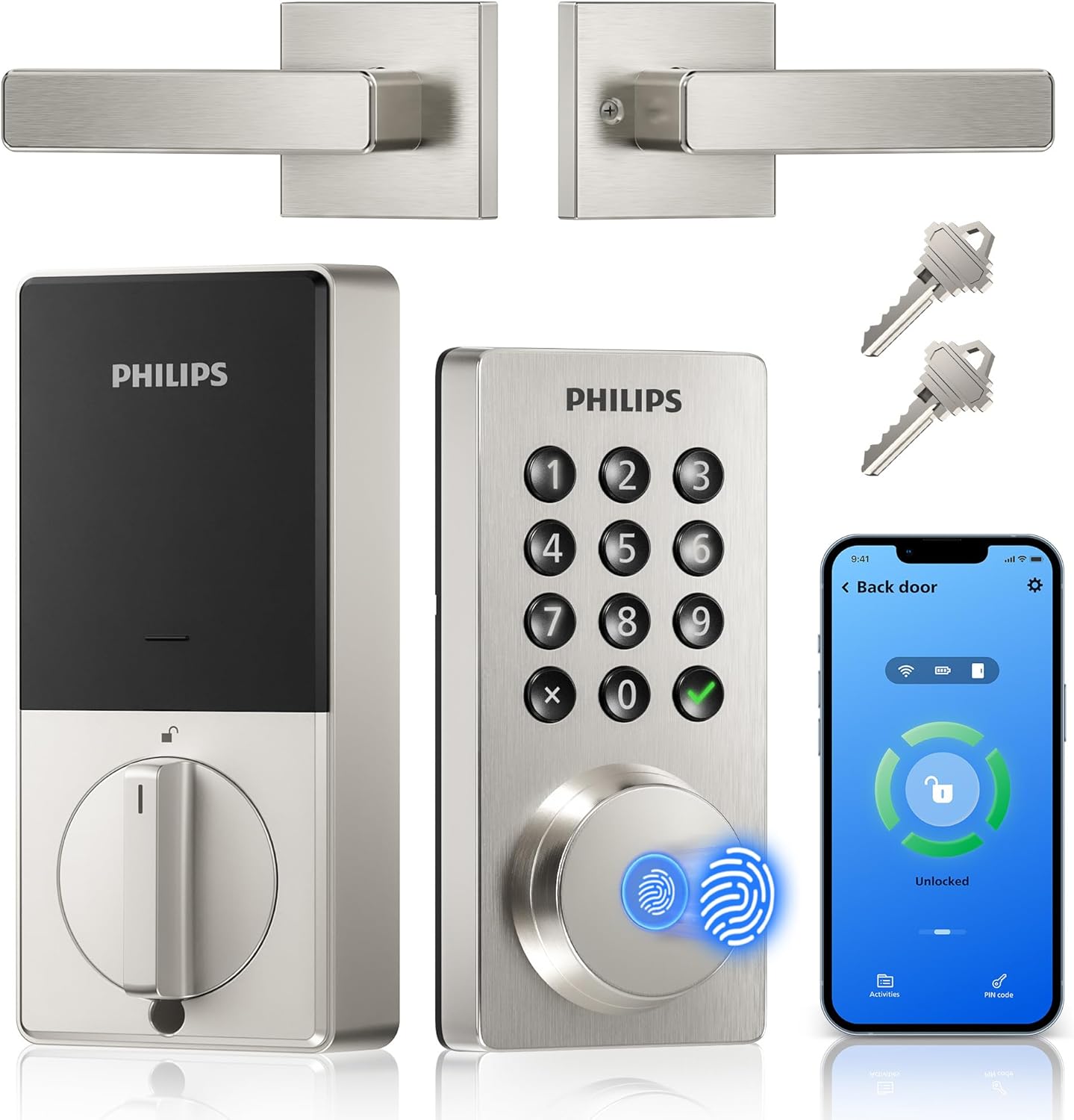
This Philips WiFi keypad lock gives homeowners reliable remote access to the front door through a simple app connection.
It supports quick fingerprint entry for family returns and allows temporary codes for visitors during deliveries or service calls. The auto-lock option helps secure the house after everyone leaves without extra effort.
The main trade-off here is the need for regular battery changes to maintain operation at all times.
This product suits households that want straightforward keyless entry without complex add-ons.
Measure your door thickness first since this lock fits only 1-3/8 to 1-3/4 inch doors. Replacement installs work best on standard wood or metal front doors with existing deadbolt holes.
New installs may need extra drilling for the handle set. I advise watching the provided video before starting because alignment affects smooth operation.
- Use a screwdriver only and avoid power tools that could damage the frame.
- Test the latch direction during setup to match your door swing.
- Install on a flat surface to ensure the keypad sits evenly.
- Check battery compartment access after mounting for future changes.
Pros
- Remote app control works from anywhere to manage front door access
- Built-in alarm detects door tampering for added break-in protection
- Fits most standard doors and installs with just a screwdriver
- Up to 100 access codes simplify sharing for cleaners or neighbors
- Voice control with Alexa or Google for hands-free locking
Cons
- Requires reliable WiFi signal at the door for remote features to work
- Batteries need replacement every few months depending on use
- Touchscreen can smudge over time and needs occasional cleaning
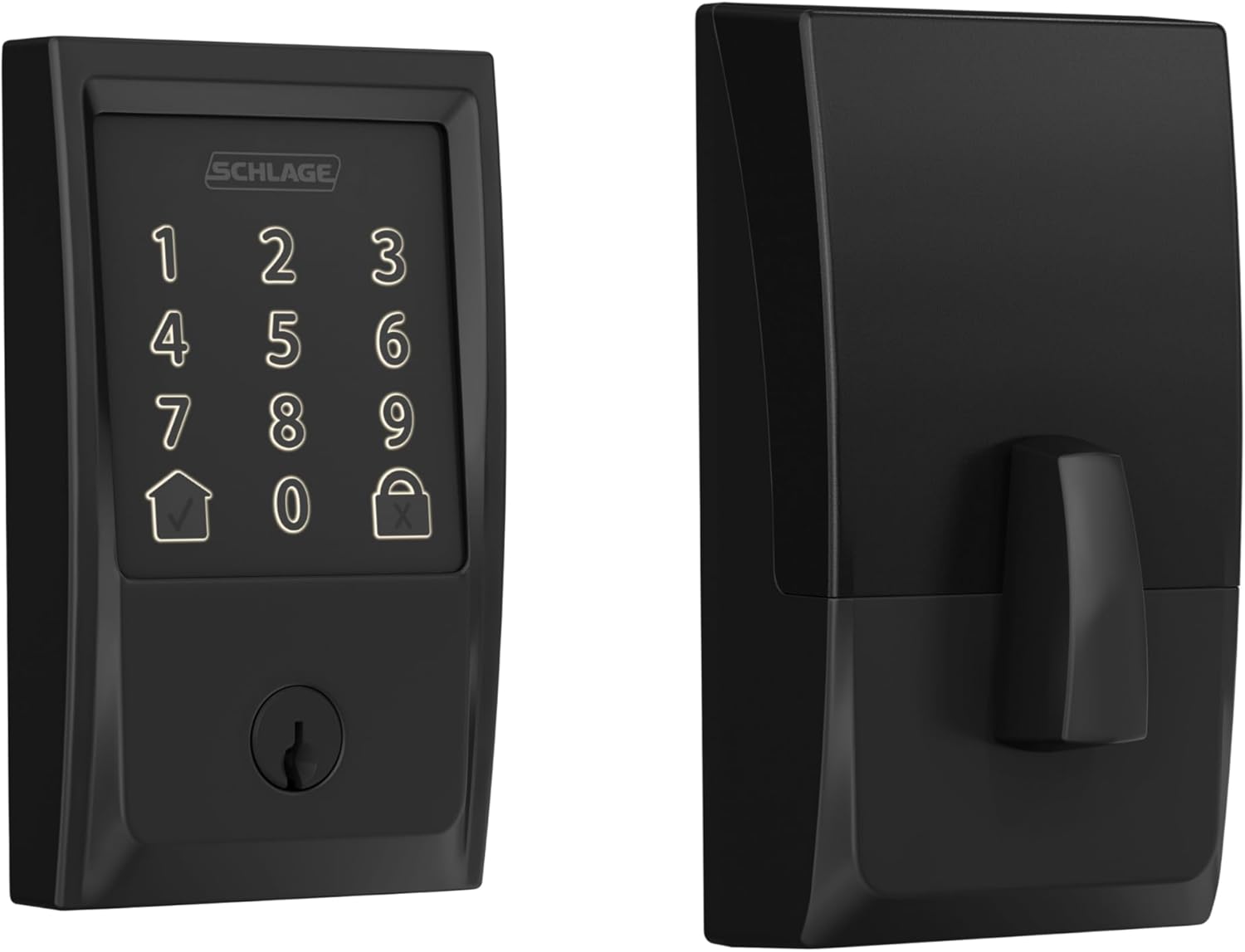
This Schlage Encode deadbolt replaces your standard front door lock with keyless entry via touchscreen or app. It connects directly to your home WiFi, so you can lock or unlock from anywhere, which gives peace of mind when deliveries sit on the porch or family arrives while you're out. The built-in alarm sounds if someone pries at the door, alerting you to potential break-ins before they happen.
For everyday routines, set auto-lock to relock the door minutes after it opens, preventing forgotten locks when kids head to school or guests use the backyard gate. Track who entered and when through the app, helping you verify if the dog walker came by or if packages were safe. One-touch locking from outside makes leaving for work quick and secure without fumbling keys.
With a backup physical key and long-lasting batteries, it handles outages or low power without leaving you locked out. The fingerprint-resistant touchscreen stays readable for repeated use, and it pairs with voice assistants for hands-free control near the driveway. Overall, it strengthens front door security for homeowners focused on family safety and property monitoring.
Durability holds up to daily wear, fitting standard doors without modifications. This setup reduces reliance on spare keys hidden outside, cutting risks from theft while enabling flexible access for trusted visitors.
Most homeowners complete setup in under 30 minutes with basic tools. It fits doors 1-3/8 to 1-3/4 inches thick and standard backsets of 2-3/8 or 2-3/4 inches, covering typical front or side entry doors.
- Just a screwdriver needed; no wiring or drilling extras required
- Includes mounting plate, strike plate, screws, and four AA batteries to start immediately
- Snap-and-stay design holds parts in place during install for easier solo work
- Remove old deadbolt first; test on interior doors if unsure about fit
Backup key works right away post-install for front porch security testing.
The Schlage Home app connects via your home WiFi for control without extra hubs. Use it to manage front door access from your phone anywhere with internet.
- Lock or unlock remotely to secure deliveries or let in repair workers
- Create and schedule up to 100 codes for family, guests, or cleaners
- View entry history and get alerts for low battery or door activity
- Customize auto-lock timing to fit your routine, like after kids enter
- Works with Alexa or Google for voice commands near the driveway
Needs steady WiFi at the door; app notifications help monitor vacation home entry.

Pros
- Supports remote locking from any location
- Fingerprint entry speeds up daily access
- Auto lock feature prevents unsecured doors
- Multiple methods reduce lost key problems
Cons
- Needs steady WiFi for remote functions
- Install may be complex on older doors
- Requires regular battery monitoring
This smart lock provides remote access to monitor and control the front door from any location. It supports fingerprint unlocking and app alerts tied directly to daily home routines like checking on deliveries.
Remote monitoring helps track door activity while at work. Fingerprint recognition allows quick entry for family members without fumbling for keys during busy mornings.
The main trade-off here is dependence on a reliable internet connection for full remote features. Without it the lock still works locally but loses alerts and app control.
This product suits homeowners in stable WiFi homes seeking straightforward keyless options for front door security.
Check your door thickness and frame type before purchase. Wood-frame doors often need extra reinforcement for a secure fit while metal doors may require different screws.
New installations demand precise hole alignment. Replacement jobs on existing deadbolts are simpler but verify the backset matches your current setup.
- Apartments with thin doors may need additional brackets for stability
- Wood doors benefit from pilot holes to avoid splitting
- Always confirm the lock fits standard 1-3/8 to 2 inch thicknesses
- Renters should get landlord approval before drilling

Pros
- Multiple entry options reduce the chance of being locked out during daily activities.
- Fingerprint access works without needing to pull out a phone or keys at the door.
- Auto-lock feature helps prevent leaving the home unsecured after coming and going.
- Installation uses basic tools and fits most common door thicknesses.
- Unlimited one-time codes simplify managing short-term visitors like delivery personnel.
Cons
- Remote app control and voice features require buying a separate WiFi gateway.
- Auto-lock only engages if the door closes completely which may need checking in some setups.
- Fingerprint reader can fail if fingers are wet or dirty after outdoor tasks.
This lock set replaces a standard front door setup with handles and multiple access methods that fit common household needs. It handles daily comings and goings by letting residents use a fingerprint or PIN instead of searching for keys.
Homeowners can set codes for regular visitors such as cleaners or relatives who stop by while others are away. The auto-lock engages after the door shuts fully which adds security without extra steps during busy mornings or evenings.
When paired with the optional gateway the system tracks who enters and leaves through the main door. This helps monitor activity around deliveries or family schedules without constant checking.
The design suits renters or owners updating an older entry point as long as the door thickness matches standard sizes. It focuses on straightforward use rather than advanced networking for everyday property protection.
This lock fits doors between 1-3/8 and 1-3/4 inches thick using only a screwdriver for most setups. Check the existing hole pattern on the door before starting to avoid extra drilling.
- Standard doors work without major modifications in most cases.
- An optional screw adds strength on weaker or warped doors but requires a specific 19/32 inch hole.
- Follow the included video or manual for handle and deadbolt alignment during the process.
The built-in Bluetooth connects directly to a phone within about 30 feet for local control and code management. Full remote features need the separate Philips WiFi gateway to link the lock to the internet.
- Users can share timed codes or view entry logs once the gateway is added.
- Voice commands through Alexa or Google Assistant also depend on that extra gateway purchase.
- Without it the app still handles basic fingerprint and PIN setup from close range.
Choosing a Smart Lock with Auto Lock
A lock that promises to secure itself needs to be trustworthy above all else. The right choice hinges on how it integrates into your daily comings and goings without creating new points of failure. These are the factors that determine whether an auto-lock becomes a reliable assistant or a source of frustration.
Locking mechanism and door sensor
An auto-lock is only useful if the door is fully closed. Some models rely on a simple timer, which assumes the latch has caught. Others use a door position sensor to confirm the door is shut before engaging the bolt. A sensor adds a layer of certainty, preventing the lock from trying to throw a deadbolt into a misaligned strike plate, which can drain batteries or damage the mechanism.
For a front door exposed to wind or one that does not always swing completely shut on its own, a sensor is a worthwhile feature. Without one, you must be diligent about closing the door firmly. This distinction is a key difference between basic and more advanced automatic locks.
Connection type and remote management
How the lock connects to your phone dictates how you control it when you are not home. Built-in Wi-Fi lets you check status or lock the door from anywhere without extra hardware. Bluetooth-only models are simpler but limit control to when you are within range, making remote access for family or guests impossible without an additional hub.
If you want to let in a neighbor to water plants or verify your teenager arrived home, a Wi-Fi connection is essential. For a side or garage door where remote access is less critical, Bluetooth can be sufficient and often extends battery life. Consider whether you want the lock to integrate with other smart security devices, as this usually requires a stable network connection.
Battery life and fail-safes
A lock that dies without warning defeats its own purpose. Auto-lock features, constant wireless communication, and frequent use all draw power. Look for a clear, multi-stage low-battery alert through both the lock itself and the companion app, giving you days of notice before a total failure.
Every lock should have a physical backup, typically a keyway, for when batteries are depleted. This is non-negotiable. For renters or those who cannot modify a doorframe, also check if the lock has external contacts for emergency power, like a 9-volt battery touchpoint or a USB-C port, which can provide a temporary boost to get you inside.
Access methods and user management
Auto-lock should not mean one-way access. You need flexible ways to get back in. A keypad for permanent and temporary codes is standard, while a fingerprint reader offers quick, keyless entry for frequent users. The best systems let you create and revoke access for cleaners, dog walkers, or guests directly from your phone, with a clear log of who entered and when.
This is where smart locks separate from basic keypad deadbolts. The ability to grant a one-time code for a package delivery or a recurring code for a weekly housekeeper, then delete it remotely, transforms access from a static key to a dynamic permission you control. Compared to standalone keypad deadbolts, this digital management is the core upgrade.
Installation and door compatibility
Not every lock fits every door. The thickness of your door and the backset, which is the distance from the edge of the door to the center of the bore hole, are the two critical measurements. Most modern smart locks are designed for standard residential doors, but older homes or solid wood doors can fall outside these norms.
A straightforward installation with a single screwdriver is common, but always verify compatibility before purchase. Some models are full handle sets, replacing your existing interior and exterior hardware, while others are deadbolt-only and leave your handle in place. The full handle sets provide a cohesive look but require a more involved installation.
Once you know how you need to control access and what your door can physically accommodate, the choice becomes clear. The goal is a lock that secures itself so reliably you stop thinking about it.
Why You Should Trust Us
Our recommendations are based on structured research, not hands-on testing. We analyze manufacturer specifications, cross-reference industry certifications from organizations like BHMA for grade and durability, and examine the architecture of smart home integration. We prioritize features that translate to real-home reliability, like consistent low-battery alerts and clear user management interfaces.
Each product is assessed against our SHU Score system, which weights factors like security implementation, connectivity reliability, everyday usability, and value. We filter out marketing claims to focus on the documented performance and design that determines how a lock will perform on your door for years.
Final Thoughts
The most effective auto-lock is one you can set and genuinely forget, trusting it to handle the final step of securing your home. It should work silently in the background, integrating with your existing routines without demanding new ones.
For most homes, the Schlage Encode Smart Wi-Fi Deadbolt is the best overall choice. Its built-in Wi-Fi removes the need for a separate hub, its auto-lock is highly configurable, and its BHMA certification provides a verified baseline for physical security. It is a straightforward, reliable upgrade for a primary entryway.
If you prefer a lock that includes a full handle set for a unified look, the Philips WiFi Keypad Door Lock with Handle is a strong contender. It offers similar direct Wi-Fi connectivity and fingerprint access in a single package, making it a good fit for a front door where you want to replace all the hardware at once. For other points of entry, like a side gate or detached garage, the connectivity and power requirements might differ.
Choosing a lock with a dependable auto-lock feature ultimately removes a small, recurring task from your mind. The right one gives you one less thing to worry about when you leave the house.
Frequently Asked Questions
Can a smart lock with auto-lock be forced open?
A quality smart lock meets the same physical security standards as a traditional deadbolt. Look for an ANSI/BHMA Grade 2 or Grade 1 certification, which indicates resistance to physical attacks like picking, prying, and impact. The auto-lock feature does not weaken the mechanism; it simply engages the existing bolt automatically after a delay.
Do you need a hub for auto-lock to work?
No, the auto-lock function is handled locally by the lock’s internal timer or sensor. A hub is only required if you want to adjust the auto-lock settings remotely or receive status notifications on your phone when you are away from home. Many modern locks have built-in Wi-Fi, eliminating the need for a separate hub entirely.
What happens if the power goes out or the batteries die?
Smart locks operate on battery power, so a home power outage does not affect them. If the lock’s own batteries die, every model should include a physical backup key to unlock the door manually. A responsible lock will provide multiple low-battery warnings via beeps, indicator lights, and app alerts long before this happens.
Is auto-lock safe with pets or children inside?
Auto-lock is generally safe for households with pets or children, as it only engages after the door has been closed and unlocked. The concern would be the door closing accidentally behind someone who stepped outside briefly. Most systems allow you to disable the auto-lock feature entirely or set a longer delay period to prevent accidental lockouts.
How do you program temporary access codes?
You create and manage temporary codes through the lock’s companion smartphone app. The process typically involves selecting a user, assigning a unique PIN, and setting a schedule for when that code is active. You can delete the code at any time, even after it has been used, which makes it ideal for service visits or guests.


Write Your Review
No reviews yet. Be the first to share your experience!