

You hear a truck pull up the driveway, but by the time you get to the front door, the delivery driver is already walking away. A standard doorbell’s range often falls short for long driveways, detached garages, or homes with thick walls, leaving you guessing who came and went.
Long range wireless doorbells solve this by using stronger signals that travel farther and penetrate obstacles, so an alert reaches you wherever you are inside. We looked at the Best Long Range Wireless Doorbells to find models that deliver reliable notifications without complex installation.
Our overall pick for best long range wireless doorbells is the SECRUI Wireless Doorbell. It offers straightforward setup and consistent performance at a practical distance for most homes. Our top picks are just below.
Our Top Picks

Pros
- Two receivers extend alerts to different floors or areas.
- Simple plug-in setup avoids wiring runs through walls.
- Chime options and volume levels fit quiet or noisy homes.
- Transmitter battery lasts years before replacement.
Cons
- No camera or screen to see who is outside.
- Receivers need nearby outlets for placement.
- Basic design offers no smart app integration.
The AVANTEK wireless doorbell kit offers straightforward alerts for everyday front door activity across bigger properties. Two receivers ensure you catch visitors whether working in a distant room or outside. Wide range coverage reaches yards and multiple indoor spaces without gaps.
This setup helps monitor package deliveries on the porch and tracks when kids return home. The weatherproof button stays functional through rain, snow, and temperature changes. Volume settings let you keep chimes from disturbing sleepers at night.
Worth noting before buying is the absence of video or identification features. This limits it to audible notifications only. The kit suits homeowners seeking basic multi-room coverage in houses without needing advanced viewing options.
Mount the transmitter on or near the front door using screws or adhesive. Wood doors accept screws easily while metal surfaces may need the included patch for hold.
- Place receivers in main living areas and upper floors for best sound reach.
- Avoid outlet spots blocked by furniture to maintain clear chimes.
- Test range after install to confirm coverage from backyard to bedrooms.
- Apartment renters can use adhesive only to avoid permanent holes.

SECRUI Wireless Doorbell for Front Door Alerts and Package Monitoring
Pros
- Plugs in and works right away with no wiring needed.
- Covers large homes and yards up to 1000 feet away.
- Button stays waterproof in rain and cold weather.
- Different chimes help tell front door from other entries.
Cons
- Supports only two buttons at most.
- Requires an outlet for the receiver to work.
- No camera to see who is at the door.
This wireless doorbell gives homeowners a straightforward way to know when someone arrives at the door without extra wiring or setup steps.
It works well for watching package deliveries on the porch or keeping track of kids coming home after school. The range reaches far enough to cover driveways and back entries on bigger lots.
Worth noting before buying that it supports only two buttons and needs a nearby outlet for the chime unit. The button holds up in rain but offers no way to see visitors.
I recommend it for basic alert needs in apartments or single-family homes where simple notification matters most.
The button stands up to rain and temperature swings from cold winters to hot summers in most U.S. climates.
- Place it on a wood or brick door frame where rain hits directly without pooling water.
- IP55 rating keeps the button working during storms that would damage lesser units.
- Avoid mounting on metal doors that could affect signal in heavy weather.
- Battery lasts up to three years even with outdoor exposure on a front porch.
This setup suits new installs on rental homes where weather exposure varies by season.
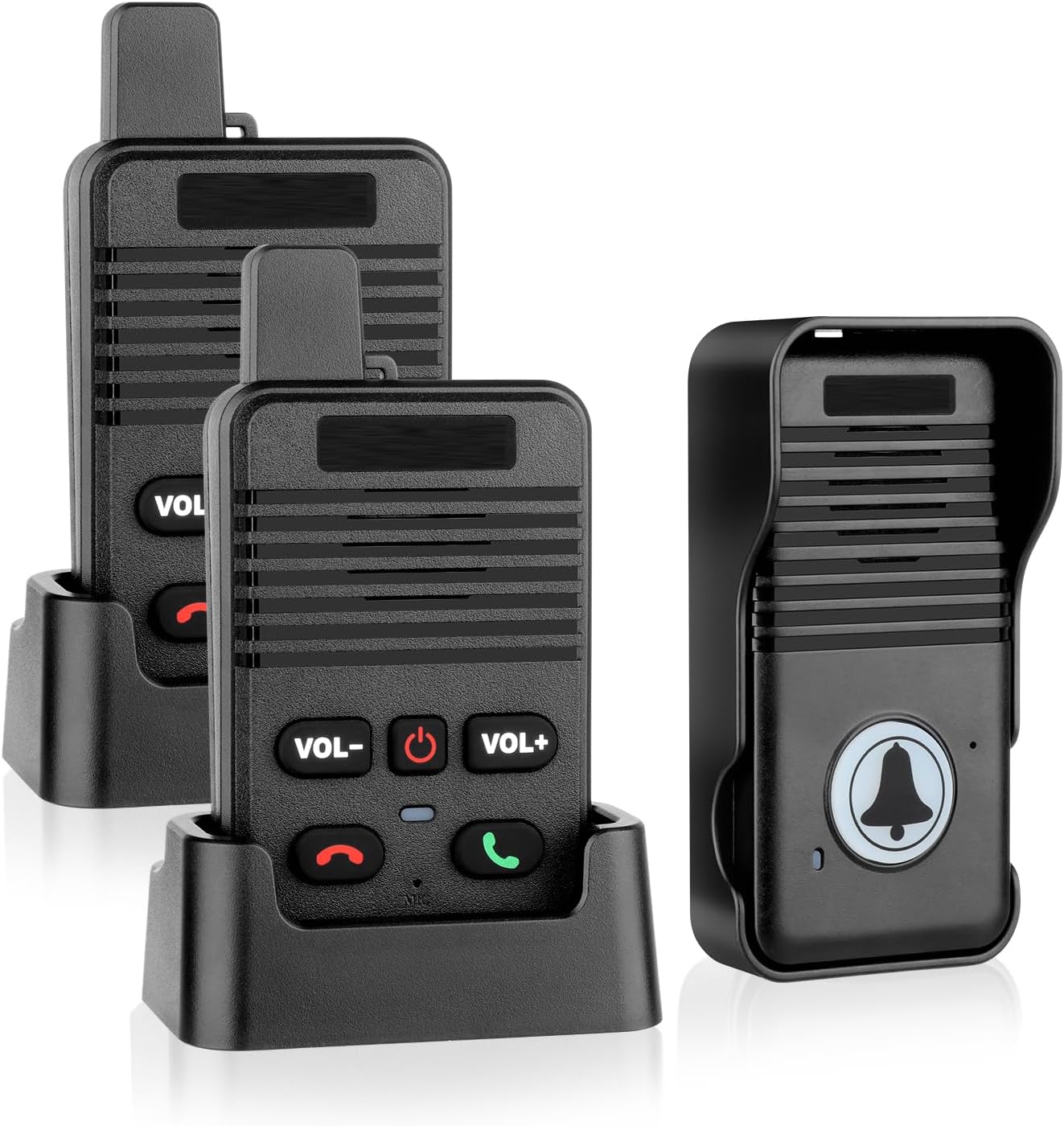
Pros
- Pre-paired for immediate use out of the box.
- Hands-free talk reduces need to hold buttons.
- Voice prompts warn of low batteries on units.
- Four chimes and volume options fit various homes.
Cons
- Receiver needs weekly charging.
- Close placement can cause feedback beeps.
- Outdoor unit requires periodic recharging.
This wireless intercom doorbell provides a simple way to communicate with visitors at the front door. It pairs easily and works without complex wiring across typical home setups.
Two-way talk helps confirm deliveries or greet family members. Extra receivers extend alerts to other floors or distant rooms in larger houses.
The main trade-off is frequent charging for the indoor receiver. Battery life on that unit lasts roughly one week with regular use.
This setup suits homeowners who want basic door monitoring without permanent installation.
Place the outdoor transmitter on a solid surface near the main entry using the included screws or tape. Apartments with metal doors may need extra adhesive for secure hold.
Pre-paired units activate right away after charging both pieces fully. Test range across wood-frame homes before final mounting to avoid weak signals.
- Charge transmitter for four months of use in most cases.
- Position receiver indoors away from direct heat sources.
- Pair additional units by following the code settings for whole-home coverage.
- Avoid close transmitter and receiver placement to prevent audio issues.

Pros
- Plugs into any outlet for quick indoor placement.
- Adjusts volume to suit different home areas.
- Pairs extra buttons for separate doors or gates.
- Requires no wiring for easy rental installation.
Cons
- Button battery requires periodic replacement.
- Chime volume may weaken through thick walls.
- Limited to two melody choices only.
This wireless doorbell kit delivers a simple alert system that lets you know about door activity from inside the home.
It handles common front porch situations like package deliveries and visitor arrivals by producing a clear chime. The setup fits apartments and houses where basic notification matters most.
Walls can reduce the effective range in larger layouts so placement needs checking first. Multiple buttons help cover driveways or side entries if added later.
I recommend this for renters and homeowners wanting straightforward door alerts without added complexity.
Installation stays simple for most homes. The receiver plugs into any indoor outlet while the button mounts outside the door with included hardware.
Consider these real scenarios before starting:
- Rentals and apartments avoid drilling into frames.
- Wood doors accept screws easily for secure button hold.
- Replacement installs reuse existing holes if matched.
- New setups need clear line of sight for best range.
Always test the chime location first in your specific layout.

Pros
- Covers large yards without extra wiring.
- Lets you choose volume to avoid disturbing sleep.
- Works as both doorbell and door sensor.
- Pairs multiple units for full property coverage.
Cons
- Receiver requires a nearby power outlet.
- Transmitter battery needs periodic replacement.
- Limited to 12 basic alert sounds.
This long range chime kit delivers alerts across big properties where standard units fall short. It handles both visitor notifications and door openings in one setup.
Front porch monitoring keeps you informed of deliveries even from the backyard. The magnetic sensor also tracks side doors during family activities with kids or pets running in and out.
The main trade-off is the plug-in receiver needs an outlet within reach. Battery changes on the transmitter add a small maintenance step over time.
I find this setup suits homeowners with spread-out lots or multiple buildings best.
The transmitter stands up to rain and sun on exposed doors. Place it on a wood or metal frame without extra covers in most climates.
Real home use shows it works on apartment entries or suburban homes with covered porches. Avoid direct hose spray on the unit during cleaning.
- Test fit before final screws on uneven surfaces.
- Paint the button to match siding for better looks.
- Check seal after heavy storms for continued function.

Pros
- No batteries needed for the receiver
- Strobe light works in loud environments
- Button lasts years on one battery
- Easy to pair multiple buttons
Cons
- Receiver requires a nearby outlet
- Signal range drops with thick walls
- Button needs occasional battery swap
This wireless doorbell kit delivers alerts across large properties using a plug-in receiver with both sound and flashing strobe. It handles everyday front door monitoring without extra wiring or complex setup.
The system suits homes where you watch for deliveries or visitors from distant rooms. The weatherproof button mounts easily on any door and confirms signals with its LED light.
The main trade-off is the receiver needs an outlet nearby, which can restrict placement in some layouts. Range may vary in homes with reinforced concrete.
I recommend it for owners of bigger houses or anyone needing both audio and visual notifications.
Setup works best on standard wood or metal doors where you can mount the button at eye level. Plug the receiver into any outlet inside to cover the main living areas.
- Choose a spot near the front door for the button to reach the receiver
- Pair the button by pressing the receiver button first then the transmitter
- Test range from the backyard or upper floors before final mounting
- Use in apartments by placing the receiver in a central room
- Avoid metal surfaces on the button that could block the signal
Buying Guide for Best Long Range Wireless Doorbells
A doorbell for a large property has one job: get the signal from the button to the chime, every time. The right choice depends less on a list of features and more on how your property is laid out and what stands between the front gate and where you sit. These are the factors that determine whether an alert is reliable or just another missed visitor.
Effective range through obstacles
The advertised maximum range is measured in open air, which rarely matches a real property line. Brick walls, metal siding, and dense insulation can cut a signal’s strength by half or more before it even reaches your backyard workshop.
Look for a model that specifies its frequency, like 433 MHz, which is known for better penetration through common building materials. This matters more than the headline number if your button will be mounted on a metal gate or a stone facade.
Receiver placement and expandability
If you spend most of your time in a basement workshop or a detached home office, a single chime in the front hallway is useless. The system should allow you to add plug-in receivers in other rooms without buying a whole new kit.
Some models support multiple receivers out of the box, letting you cover a kitchen, bedroom, and garage simultaneously. This turns a notification system into something that actually works with your daily routine, not against it.
Weather resistance at the button
The transmitter lives outside in the elements year-round. A rating of IP55 or higher means it is protected against dust and water jets, which covers rain, snow, and sprinkler spray. Without this, humidity and temperature swings will shorten its life.
Check the specified operating temperature range, especially if you live where winters are severe. A button that fails in a deep freeze leaves you unaware of visitors until you find it yourself.
Alert clarity for noisy environments
A chime that blends into the background noise of a laundry room or workshop defeats its purpose. Adjustable volume is standard, but the quality of the speaker and the distinctiveness of the tone matter more in practice.
Some models include a visual strobe light, which is essential for anyone with hearing difficulties or for places like garages where machinery drowns out sound. This turns a simple alert into one you cannot miss, similar to the utility of a dedicated security camera system for visual confirmation.
Battery life and maintenance signals
Changing a battery in a hard-to-reach gatepost button is a chore you want to do as seldom as possible. Manufacturers often quote a battery life based on minimal use, but a busy household or business entrance will see more presses.
A low-battery indicator, either a light on the button or a changed chime pattern, gives you a warning. Without it, the first sign of failure is a visitor who rings with no response.
Once you map out the distance and obstacles between your entry points and where you need the alert, the choice narrows to a few models built for that job. The rest is matching features like chime selection or visual alerts to your specific environment.
Why You Should Trust Us
Our recommendations are based on structured analysis of manufacturer specifications, independent certification standards, and aggregated performance data. We cross-reference key metrics like signal frequency, weatherproof ratings, and expandability against real-world deployment scenarios for large homes, rentals, and businesses.
Each product is evaluated using our SHU Score system, which weights factors like reliable range through barriers, ease of adding receivers, and durability under weather exposure. We do not rely on single sources or marketing claims, ensuring our guidance is grounded in verifiable performance parameters.
Final Thoughts
Choosing a long range wireless doorbell comes down to reliable signal delivery through your property’s specific layout and ensuring the alert reaches you where you actually spend time.
For most homes with a long driveway or several interior walls, the SECRUI Wireless Doorbell is our Editor’s Pick. Its balance of effective range, simple multi-receiver expansion, and weather resistance covers the needs of a typical household without complexity. It is a straightforward upgrade from a standard doorbell.
For a business, warehouse, or very large property where signal must penetrate multiple heavy walls, the ERA-Doorbell-Plug In Wireless Doorbell Kit stands out as the Best Seller for its proven long-range performance. Its 433 MHz signal and support for unlimited transmitters make it suitable for commercial settings or multi-building coverage, much like a robust smart security system is chosen for comprehensive monitoring.
If you need two-way audio to communicate with visitors at a gate, a model with full-duplex intercom functionality adds that layer of convenience. The right choice removes the uncertainty of not knowing who is at your door, no matter how far away you are inside.
FAQs
How far can a wireless doorbell signal really reach?
Effective range depends heavily on obstacles. While some models advertise up to $132.99 feet in open air, brick walls, metal, and dense insulation can reduce that by more than half. A 433 MHz signal generally penetrates common building materials better than higher frequencies for more reliable indoor coverage.
Can you add more chimes to a wireless doorbell system?
Many systems allow you to add multiple plug-in receivers, so you can have chimes in a workshop, bedroom, and kitchen. Check the product specifications for the maximum number of supported receivers, as some kits include two out of the box and support adding several more for whole-home coverage.
Do wireless doorbells work through metal gates or garage doors?
Metal is one of the most challenging materials for wireless signals to penetrate. A doorbell with a lower frequency signal, like 433 MHz, has a better chance of getting through a metal gate or garage door than a standard model, but the effective range will still be significantly reduced compared to an open path.
What happens if the doorbell button battery dies?
Most quality models include a low-battery indicator, such as an LED light on the button or a specific chime pattern from the receiver. This gives you a warning to replace the battery before it fails completely. Buttons typically use a standard lithium cell that lasts one to three years depending on usage.
Are wireless doorbells secure from interference or neighbors?
Modern wireless doorbells use paired codes or digital addressing to prevent interference from nearby systems. This means your neighbor’s doorbell is unlikely to trigger your chime. Choosing a model with multiple channel options or code settings adds another layer of security against random signal collisions.


Write Your Review
No reviews yet. Be the first to share your experience!