

Coming home to a dead lock battery or a lost key is a problem that always happens at the worst time. Traditional smart locks that rely on your home wifi can fail when the network drops, leaving you locked out or unable to manage access for a delivery.
Non-wifi smart locks use other wireless protocols like Bluetooth or proprietary hubs to give you keyless entry and remote control without tying your front door to your internet router. We looked at the Best Non Wifi Smart Locks to find options that keep access in your hands even when your wifi is down.
Our overall pick for best non wifi smart locks is the Veise VE019 Fingerprint Smart Lever Lock. It provides multiple access methods and app control through a separate gateway, offering a stable connection that does not depend on your home network. Our top picks are just below.
Our Top Picks

Pros
- Fingerprint recognition works fast for daily use, reducing fumbling with keys at the front door.
- Multiple code options fit family routines and occasional visitors without compromising security.
- Built-in handle set simplifies upgrading your entire front door lock in one installation.
- App provides real-time alerts and history, helping track access around deliveries or family schedules.
- Backup mechanical keys ensure entry during power outages or WiFi issues.
Cons
- Requires 8 AA alkaline batteries, which are not included and need regular replacement.
- Best suited for standard door thicknesses of 1-3/8 to 1-3/4 inches; measure first to avoid fit issues.
- Keypad lighting helps at night but may need extra home lighting for low-visibility conditions.
This Philips WiFi keypad door lock replaces your standard front door deadbolt with options like fingerprint, app control, voice commands, or codes, making entry smooth for family members carrying packages or kids' gear. You gain peace of mind from real-time notifications about who unlocks the door and when, whether checking on deliveries left at the porch or ensuring teens get home safely after school. The auto-lock feature kicks in customizable seconds after closing, preventing forgetful exits that leave your home exposed during daily routines.
For guest access, create one-time or scheduled codes via the app, ideal for letting in repair workers or dog walkers without being present. Vacation mode disables the keypad entirely, securing your property while you're away and reducing risks from unknown visitors approaching the driveway. Soft lighting on the keypad aids nighttime use, and silent mode keeps operations quiet to avoid waking sleeping children inside.
Backup keys provide manual access if power fails or WiFi drops, ensuring reliability for everyday front door security. Activity logs in the app let you review entries over time, spotting patterns like frequent late-night unlocks that might signal issues with shared codes. Overall, it fits standard doors and handles common household scenarios without complexity.
Verify your door fits before buying: works on thicknesses from 1-3/8 to 1-3/4 inches (38mm to 50mm). Use only a screwdriver for a quick DIY setup, following the provided video guide.
- Supply 8 AA alkaline batteries (not included) for power.
- Press and hold reset button for 5 seconds to activate after install.
- Test mechanical keys and keypad right away to confirm fit on your front door.
- Connects directly to home WiFi; no extra hub needed for app setup.
The Philips Home Access app handles remote control without hubs, linking to your home WiFi for front door management from anywhere. Get instant alerts on unlocks to monitor deliveries or family arrivals.
- Manage fingerprints, codes, and schedules for users like kids or guests.
- View full access history to track entries over days or weeks.
- Works with Alexa or Google Assistant for voice commands when hands are full.
- Set auto-lock timing and vacation mode for hands-off security.

Pros
- Multiple unlock methods fit different family members and situations
- Built-in WiFi enables control from anywhere without extra devices
- Real-time notifications track who enters your home
- Simple setup works on most standard doors
- Custom passcodes manage guest access easily
Cons
- Batteries not included, so purchase 4 or 8 AA alkaline separately
- No door sensor means auto-lock works only if door is fully closed
- Requires stable home WiFi nearby for reliable remote access
This Philips WiFi deadbolt offers straightforward keyless entry for your front door, replacing traditional locks with options like fingerprint scans, app control, or passcodes. For busy mornings rushing kids to school, a quick finger touch opens the door without fumbling for keys, while remote unlocking from your phone handles package deliveries when you're at work. Entry notifications keep you informed about who's coming and going, providing peace of mind during the day.
Auto-locking after a set time ensures your home stays secure even if you forget in the rush out the door, and away mode disables most access methods except a master code when you're on vacation. Family members each get their preferred method, from voice commands via smart speakers to physical keys as backup. This setup reduces daily hassles around the front entry while maintaining solid protection.
Custom passcodes let you grant temporary access to service providers without being home, tracking exactly when they arrive and leave through the app history. Though it lacks a door sensor, the flexible unlock variety covers most household needs, making it a practical upgrade for monitoring porches and securing against unauthorized entry.
Overall, it delivers reliable control for everyday home defense, focusing on convenience in real scenarios like watching over pets inside or gates near driveways.
Check your door thickness first, as this lock fits standard sizes from 1-3/8 to 2 inches thick. Most front doors match this without issues.
- Use just a screwdriver for a 10-minute DIY install on right or left-handed doors.
- Provide 4 or 8 AA alkaline batteries, as none come included.
- Ensure your door has a standard deadbolt hole setup; measure beforehand to avoid returns.
- Available in black or nickel finish, so confirm color preference.
The app connects directly via your home WiFi for remote locking, unlocking, and alerts without any hub. Keep the lock within range of your router for steady performance.
- Works with common home networks; update the app for voice control with Alexa or Google Assistant.
- View entry history and manage up to 100 passcodes or fingerprints for family and guests.
- Real-time notifications arrive on your phone for door activity.
- Away mode adds protection by restricting access remotely.

Pros
- Allows remote unlocking for deliveries without leaving work.
- Fingerprint access works quickly for daily use.
- App shows activity logs for tracking entries.
- Multiple unlock methods suit different household members.
- Battery alerts prevent unexpected power loss.
Cons
- Requires stable WiFi which may fail during outages.
- Installation needs precise door measurements for fit.
- Lacks a deadbolt for added security.
The Veise VE029 provides convenient remote access for homeowners who need to manage entry from afar. It works well for monitoring the front door during package deliveries or when kids return from school.
Real-time alerts notify you of activity and the fingerprint option speeds up entry when carrying items. Multiple passcode types let you control who enters and for how long.
It relies on a stable internet connection which can be an issue in areas with frequent outages. The lever design fits many standard doors but requires careful alignment during setup.
This lock suits busy households with varying access needs.
Check your door thickness first as this lock fits doors from 1-3/8 to 2 inches. Standard wood or metal entry doors work best for replacement installs.
New installations may need extra drilling for the handle and wiring path. Replacement jobs often take less time since holes already exist.
- Measure the backset to confirm fit before purchase.
- Use a screwdriver only for most setups on prepped doors.
- Apartment renters should verify lease rules on modifications.
- Wood-frame homes need solid mounting to avoid loose handles over time.

Pros
- Supports remote locking from any location
- Fingerprint entry speeds up daily access
- Auto lock feature prevents unsecured doors
- Multiple methods reduce lost key problems
Cons
- Needs steady WiFi for remote functions
- Install may be complex on older doors
- Requires regular battery monitoring
This smart lock provides remote access to monitor and control the front door from any location. It supports fingerprint unlocking and app alerts tied directly to daily home routines like checking on deliveries.
Remote monitoring helps track door activity while at work. Fingerprint recognition allows quick entry for family members without fumbling for keys during busy mornings.
The main trade-off here is dependence on a reliable internet connection for full remote features. Without it the lock still works locally but loses alerts and app control.
This product suits homeowners in stable WiFi homes seeking straightforward keyless options for front door security.
Check your door thickness and frame type before purchase. Wood-frame doors often need extra reinforcement for a secure fit while metal doors may require different screws.
New installations demand precise hole alignment. Replacement jobs on existing deadbolts are simpler but verify the backset matches your current setup.
- Apartments with thin doors may need additional brackets for stability
- Wood doors benefit from pilot holes to avoid splitting
- Always confirm the lock fits standard 1-3/8 to 2 inch thicknesses
- Renters should get landlord approval before drilling

Pros
- Auto-lock prevents forgetful moments on the way out
- Fingerprint access works quickly without pulling out keys
- App manages codes for visitors without sharing your main one
- Backup keys and power port reduce lockout risks
Cons
- Remote features need a separate gateway purchase
- Fits standard doors but may need adjustments on older frames
- No built-in camera for visual entry confirmation
The Veise VE019 smart lever lock offers straightforward keyless entry for front doors in homes and rentals. It handles multiple access methods in one unit that replaces a standard handle.
Fingerprint recognition and app-based codes make it simple to let family or guests in without keys. This setup works well for tracking who enters during package deliveries or after kids return from school.
Worth noting before buying is the need for the optional gateway to enable remote controls and voice commands from anywhere. Without it the lock stays limited to local use only.
This product suits households that want basic smart access on standard doors without complex setups.
This lever lock replaces existing handles on doors 1-3/8 to 2 inches thick. It works on both left and right handed doors in apartments or single family homes.
- Measure your current handle and door thickness first to confirm fit
- Use a screwdriver for the 15 minute swap on most wood or metal frames
- Check for a straight edge on the door for smooth operation after install
- Older homes may need minor filing if the hole pattern differs
- No drilling required but test the latch alignment before final tightening
Standard US doors usually need no extra parts beyond the included hardware.
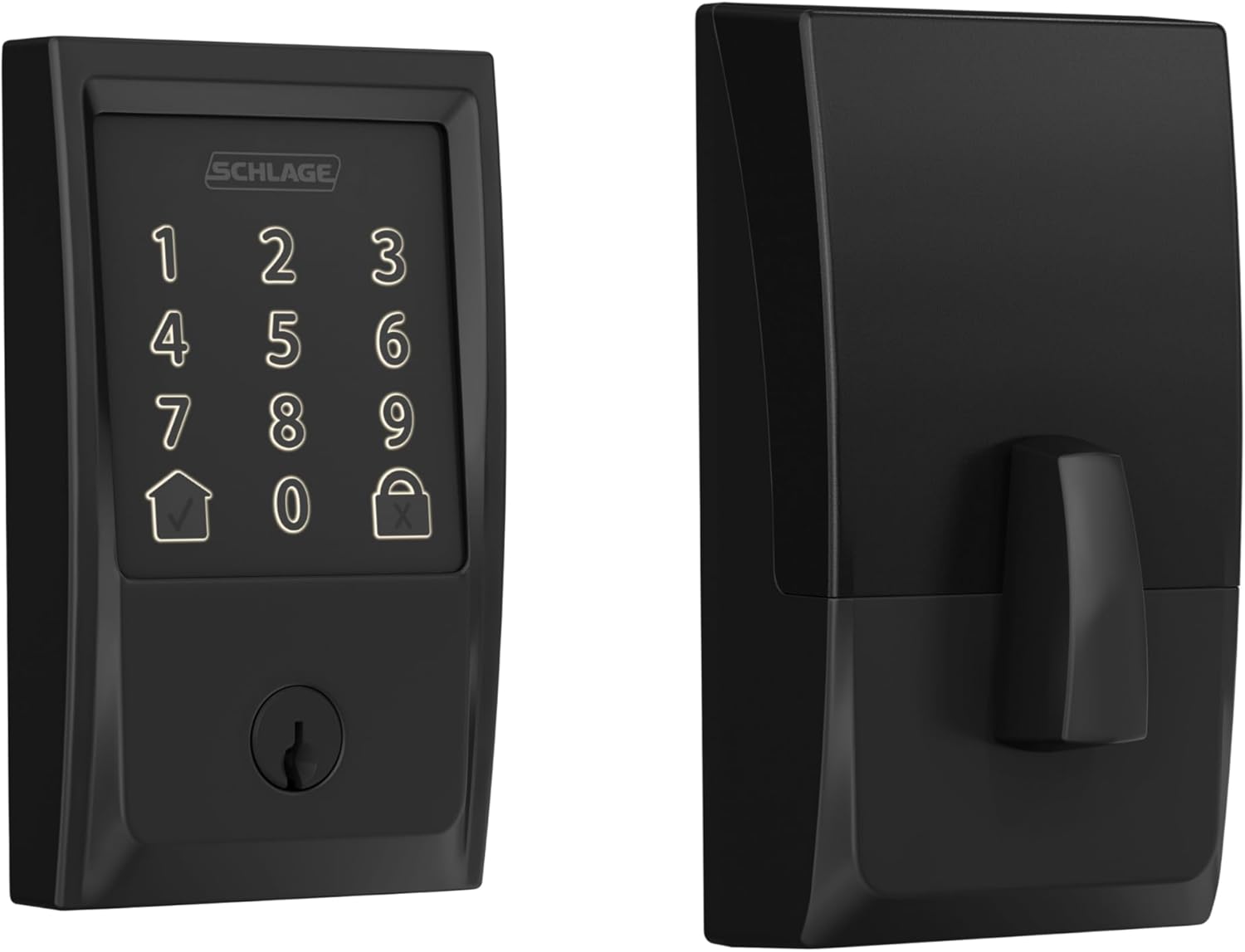
Pros
- Remote app control works from anywhere to manage front door access
- Built-in alarm detects door tampering for added break-in protection
- Fits most standard doors and installs with just a screwdriver
- Up to 100 access codes simplify sharing for cleaners or neighbors
- Voice control with Alexa or Google for hands-free locking
Cons
- Requires reliable WiFi signal at the door for remote features to work
- Batteries need replacement every few months depending on use
- Touchscreen can smudge over time and needs occasional cleaning
This Schlage Encode deadbolt replaces your standard front door lock with keyless entry via touchscreen or app. It connects directly to your home WiFi, so you can lock or unlock from anywhere, which gives peace of mind when deliveries sit on the porch or family arrives while you're out. The built-in alarm sounds if someone pries at the door, alerting you to potential break-ins before they happen.
For everyday routines, set auto-lock to relock the door minutes after it opens, preventing forgotten locks when kids head to school or guests use the backyard gate. Track who entered and when through the app, helping you verify if the dog walker came by or if packages were safe. One-touch locking from outside makes leaving for work quick and secure without fumbling keys.
With a backup physical key and long-lasting batteries, it handles outages or low power without leaving you locked out. The fingerprint-resistant touchscreen stays readable for repeated use, and it pairs with voice assistants for hands-free control near the driveway. Overall, it strengthens front door security for homeowners focused on family safety and property monitoring.
Durability holds up to daily wear, fitting standard doors without modifications. This setup reduces reliance on spare keys hidden outside, cutting risks from theft while enabling flexible access for trusted visitors.
Most homeowners complete setup in under 30 minutes with basic tools. It fits doors 1-3/8 to 1-3/4 inches thick and standard backsets of 2-3/8 or 2-3/4 inches, covering typical front or side entry doors.
- Just a screwdriver needed; no wiring or drilling extras required
- Includes mounting plate, strike plate, screws, and four AA batteries to start immediately
- Snap-and-stay design holds parts in place during install for easier solo work
- Remove old deadbolt first; test on interior doors if unsure about fit
Backup key works right away post-install for front porch security testing.
The Schlage Home app connects via your home WiFi for control without extra hubs. Use it to manage front door access from your phone anywhere with internet.
- Lock or unlock remotely to secure deliveries or let in repair workers
- Create and schedule up to 100 codes for family, guests, or cleaners
- View entry history and get alerts for low battery or door activity
- Customize auto-lock timing to fit your routine, like after kids enter
- Works with Alexa or Google for voice commands near the driveway
Needs steady WiFi at the door; app notifications help monitor vacation home entry.
Buying Guide for Best Non Wifi Smart Locks
A non-wifi smart lock is not about missing features, it is about choosing a more reliable connection for the one device that should never fail. The right lock matches your door type, your household’s routine, and your tolerance for maintenance. Here is what separates a dependable lock from one that adds frustration.
Connection type and range
Bluetooth locks connect directly to your phone within a short distance, which is perfect for auto-unlock as you approach but useless for letting someone in while you are at work. Models that use a dedicated hub create a separate, low-power network in your home, allowing for true remote control from anywhere without touching your home wifi.
Consider where you need control. For a front door where you want to grant temporary access to guests, a hub-based system is necessary. For a side or garage door you only use yourself, a simple Bluetooth lock removes the key without the complexity. Compared to standard keypad smart locks, these non-wifi options avoid router compatibility issues entirely.
Power source and backup access
All electronic locks run on batteries, but their lifespan and low-battery behavior are critical. A lock that gives you a week of warning before it dies is a convenience. A lock that dies silently is a security failure.
Look for clear alerts, both on the lock itself and in the companion app. A physical key override is the ultimate backup, but some models offer a USB-C port for emergency power. This is especially important for renters who cannot risk being locked out and may not have permission to modify the door for hardwiring.
Physical form and door compatibility
Smart locks come as deadbolts, lever handles, or knob sets. A deadbolt is the strongest mechanical point for an exterior door, but it requires a separate handle to turn. A lever or knob lock combines the latching and locking mechanism into one unit, which is simpler to install but may not meet the same security grade.
Check your door’s thickness, backset measurement, and whether it is left or right-handed. Most modern locks are adjustable, but confirming fit prevents a frustrating return. For a comprehensive front door upgrade that includes both security and style, reviewing options for matte black smart locks can help coordinate your hardware.
Access methods and user management
The best lock offers more than one way in. A fingerprint reader is fast for daily use, a keypad is reliable for guests, and a physical key is your last resort. The management app should let you create temporary codes, schedule access for cleaners, and revoke permissions instantly.
Think about who needs entry. A family home benefits from multiple permanent fingerprints. A rental property needs easy code cycling. The ability to see a log of who entered and when turns a lock from a barrier into a monitoring tool. For properties where multiple doors need coordinated access, interconnected smart locks offer a unified system.
Durability and weather resistance
An exterior lock faces sun, rain, and temperature swings. Electronics do not like moisture, and a keypad that fades or a fingerprint sensor that fails in the cold is worse than a traditional lock.
Look for an IP rating for water and dust resistance. Metal construction withstands physical wear better than plastic. A lock with a BHMA certification has been tested for cycles and finish durability, which means it is built to last through years of daily use without the electronics becoming the weak point.
The goal is a lock that disappears into your routine, providing security without demanding attention. By matching the connection type to your needs and the physical design to your door, you get keyless entry that works on your terms.
Why You Should Trust Us
Our recommendations are based on deep market research and analysis, not hands-on testing. We evaluate products by cross-referencing manufacturer specifications with independent security certifications from organizations like ANSI and BHMA. We analyze feature sets against common home scenarios, from busy family entries to rental property management.
Each product is assessed using our SHU Score system, which weights factors like reliability of connection, battery management, access flexibility, and durability. This method allows us to compare locks objectively, focusing on how they perform in real homes over time, free from marketing claims.
Final Thoughts
Choosing a non-wifi smart lock comes down to prioritizing a stable, independent connection for your door. The best lock for you fits your specific entryway and gives you control without adding network-related worries.
Our Editor’s Pick, the Veise VE019 Fingerprint Smart Lever Lock, is the best overall choice for its blend of AI fingerprint recognition, multiple access methods, and hub-based remote management. It is a strong option for those who want reliable keyless entry without wifi dependency, particularly for interior doors or secondary entries.
The proven Best Seller, the Schlage Encode Smart Wi-Fi Deadbolt, remains a top choice for front door security. While it uses wifi, its exceptional build quality, BHMA certification, and robust user management set a high standard that informs what to look for in any smart lock, making it a valuable benchmark. For those integrating with a broader Apple ecosystem, exploring HomeKit smart locks might be the next logical step.
The right lock removes the anxiety of lost keys and forgotten bolts, replacing it with quiet, consistent control over who comes through your door.
FAQs
Can you control a non-wifi smart lock remotely?
Yes, but not directly over the internet. Remote control requires the lock to be connected to a dedicated hub within your home, which then connects to your router. This creates a separate network for the lock, allowing you to manage it from your phone anywhere. Without a hub, control is limited to a short Bluetooth range from your device.
Do non-wifi smart locks work during a power outage?
They continue to function because they are battery-powered. The electronic locking mechanism and access methods like fingerprints or keypads will work as long as the batteries have charge. A power outage only affects remote features if your home internet and the required hub lose power.
Is a fingerprint reader reliable on an exterior door?
Modern capacitive sensors are quite reliable but can struggle with very wet, dirty, or extremely dry fingers. Look for a lock with an IP weatherproof rating to protect the sensor from rain and dust. For consistent access in all conditions, having a backup keypad or physical key is practical.
How do you grant temporary access to guests?
Most companion apps let you generate temporary or scheduled passcodes. You create a code, set its active dates and times, and share it with your guest. The code stops working after its expiry or after a single use. You can also instantly revoke any code from the app if plans change.
What is the main advantage over a traditional keypad lock?
The primary advantage is the ability to manage access digitally without distributing physical keys. You can change codes remotely, see an entry log, and integrate with other smart home devices for routines. It adds a layer of administrative control and convenience that a basic mechanical keypad cannot provide.



Write Your Review
No reviews yet. Be the first to share your experience!