

A doorbell camera that washes out every afternoon is worse than having none at all. It gives a false sense of security while missing details when the sun hits the lens, turning a delivery person into a bright silhouette and making faces impossible to recognize.
Cameras built for high dynamic range manage that extreme contrast, keeping the image usable whether someone is standing in full sun or shadow. We looked at the Best Doorbell Cameras For Direct Sunlight to find models that handle glare without requiring constant adjustment or special mounting.
Our overall pick for best doorbell cameras for direct sunlight is the Ring Battery Doorbell Plus. Its Retinal 2K video is tuned to preserve detail in challenging light, balancing bright backgrounds with darker foregrounds so you can see who is at the door. Our top picks are just below.
Our Top Picks

Pros
- Flexible wired or battery setup for any door.
- Wide view covers head to toe at the entrance.
- Free alerts without extra fees for detections.
- Indoor chime helps hear visitors throughout the house.
Cons
- MicroSD card must be bought separately for storage.
- Battery life shortens with frequent use or cold weather.
- Requires 2.4 GHz Wi-Fi only.
The Tapo D225 delivers reliable front door coverage for everyday homeowners who need simple monitoring without subscriptions. It handles both wired and battery options to fit different homes.
This setup works well for watching package deliveries on the porch or spotting visitors at the entry. Full color night vision helps maintain visibility after dark while AI alerts focus on people or vehicles.
The main trade-off is the need for a separate microSD card to store recordings locally. Battery performance also varies with weather and usage patterns.
It suits homeowners seeking straightforward doorbell coverage without complex setups.
Position the Tapo D225 at standard doorbell height on your front door for best results. The included wedges help adjust angles on wood or metal frames.
- Use the 15 degree wedge on narrow porches to reduce side blind spots.
- Place the chime indoors near high traffic areas like the kitchen.
- Hardwire it on homes with existing wiring for nonstop recording.
- Check battery models first on apartments without wiring access.
- 180 degree view captures packages on the ground and taller visitors.

Pros
- No fees for video storage or alerts
- Shows both people and ground packages at once
- Works wired or with removable battery
- Connects to existing home chimes
Cons
- Battery stays installed even in wired setups
- Only works on 2.4 GHz networks
- Does not support Apple HomeKit
The eufy E340 provides solid front door coverage with its dual cameras that capture both head-to-toe views and ground level packages.
This setup helps when deliveries arrive or visitors approach while you are inside or away. Local storage keeps footage on the device without extra costs.
The main trade-off is that the battery must remain in place even when wired to power. It also skips support for certain smart home systems.
I find it works best for homeowners who want simple monitoring without ongoing fees and already use compatible voice assistants.
Position the doorbell at standard height on a door frame or siding for the best visitor and package views. Wood frame homes allow easy screw mounting while brick may need anchors.
Consider these placement factors:
- Angle the unit to cover the full porch area in apartments with limited space.
- Avoid direct sun or overhang shadows that reduce night visibility on new installs.
- Replace an old doorbell by using existing wires for continuous power in older homes.
- Test the field of view before final mounting to catch driveway edges.
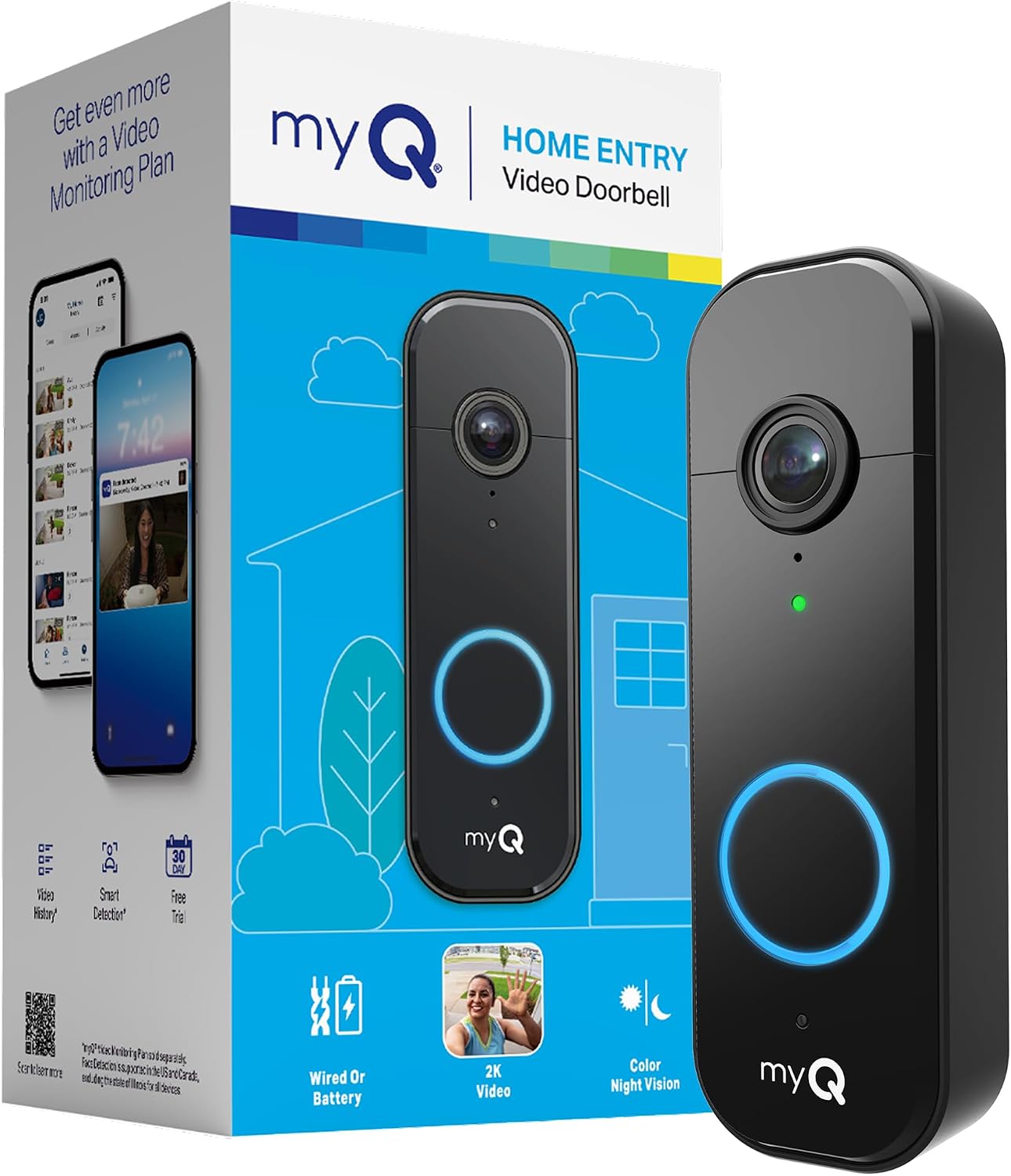
Pros
- Easy switch between battery and wired power options
- Provides clear images even at night with color vision
- Sends instant alerts for any detected movement nearby
- Fits most homes with flexible install choices
Cons
- Advanced person detection needs an extra paid plan
- Recharging the battery requires removing the unit periodically
- Wireless chime accessory is not yet available
The Chamberlain myQ Video Doorbell gives homeowners a practical way to watch the front entry from anywhere. It delivers steady video that helps track daily comings and goings without added complexity.
Motion alerts prove useful for package deliveries on the porch or spotting visitors during the day. The wide angle covers the full doorway area in most standard setups.
Worth noting before buying: full AI alerts for faces require a separate plan. Basic motion detection works without it but offers fewer details.
This model suits renters and homeowners who want straightforward video monitoring on a front door or porch.
Place the doorbell at eye level on the door frame or siding for the best view of approaching visitors and packages. This height works on both wood and metal doors common in many homes.
Key placement tips include these scenarios:
- Apartments with narrow entries benefit from centering the unit to avoid wall obstructions
- Wood-frame homes allow easy wired connection to existing chimes
- Driveway views improve when angled slightly toward the path
- Avoid direct sun exposure that can wash out images at certain times

Pros
- Battery pack removes for easy recharging.
- Wide view covers the full porch area.
- Color night vision shows details after dark.
- Motion alerts reach the phone in real time.
Cons
- Full video history requires a paid subscription.
- Battery needs recharging every few months.
- Alerts may trigger from passing cars or animals.
The Ring Battery Doorbell Plus offers reliable front door monitoring for everyday homes. It shows the full porch area clearly and sends alerts when motion occurs nearby.
Homeowners can check deliveries or greet visitors through the two-way talk feature without stepping outside. The battery design allows placement on any door frame for flexible coverage.
Worth noting before buying: full access to recorded clips depends on a separate subscription plan. Basic live views and alerts work without it.
This product suits single-family homes or rentals that need simple wireless setup.
Position the doorbell at eye level on the door frame for the best view of faces and packages. This height works well on both wood and metal doors in standard homes.
- Angle the unit slightly downward to cover the porch steps and landing.
- Avoid spots with direct overhead sun that may wash out the image.
- Test the motion zone on your phone to reduce alerts from the street.
- Renters can mount it with screws and remove it when moving without damage.
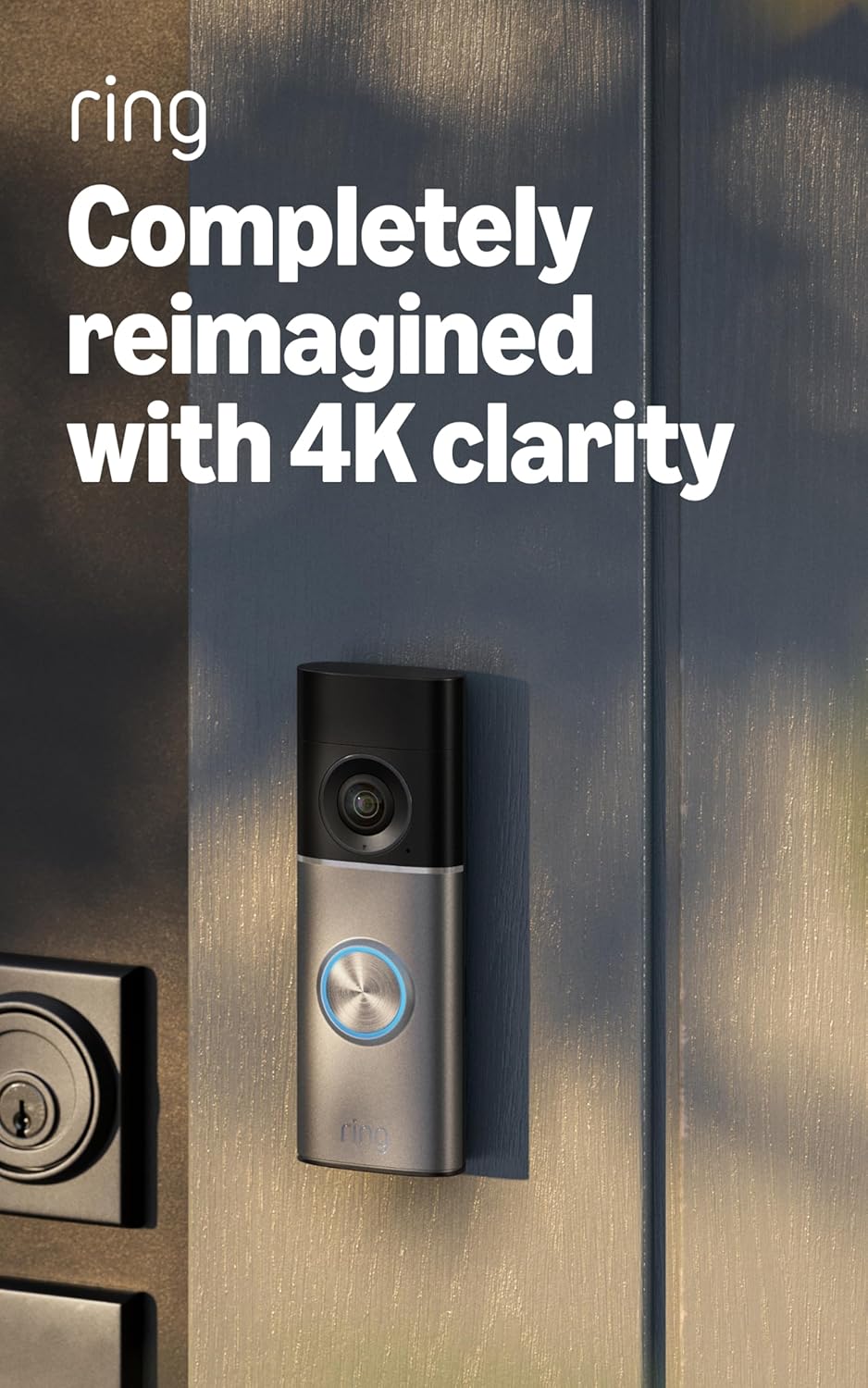
Pros
- Hardwired setup provides continuous operation without recharging
- Enhanced zoom helps identify people or objects farther from the door
- Low light performance keeps images usable during evening hours
- Precise motion detection cuts down on random alerts
Cons
- Installation requires an existing wired doorbell setup or electrician help
- Full features like detailed alerts need a paid subscription
- Video may switch to black and white with no ambient light at all
The Ring Wired Doorbell Pro mounts at the front door to give a steady view of the porch and walkway. Homeowners can check the area from their phone when expecting deliveries or visitors.
Its zoom feature lets you see details like package labels or a person standing farther back near the driveway. This setup works well for families who want to know when kids return home or when someone stops by the gate.
Two way talk allows quick conversations with anyone at the door without opening it. The hardwired design keeps the unit running all the time so there are no gaps in coverage during long days away from the house.
Alerts focus on real movement at the entry rather than every passing car or animal. This gives practical peace of mind for basic property checks around the home.
Position the doorbell at standard height on the door frame or wall beside the entrance for best coverage of the porch steps and walkway.
- Mount it facing the main approach path to catch people walking up from the street or driveway.
- Avoid spots with direct sun glare or heavy shadows that could reduce image clarity during the day.
- Check the view angle covers the area where packages are typically set down.
This model connects to existing doorbell wiring for constant power without battery swaps.
- Confirm the current wiring provides enough voltage before starting the swap.
- Professional help may be needed if no prior doorbell wires exist at the entry.
- Once installed the unit stays active around the clock for ongoing monitoring.
Buying Guide for Best Doorbell Cameras For Direct Sunlight
A doorbell for a sunny entry needs to see clearly when the light is at its worst, without overexposing the sky or underexposing a visitor’s face. The right combination of lens quality, processing, and physical design makes the difference between a useful view and a whiteout.
High dynamic range and exposure control
High dynamic range is the camera’s ability to capture detail in both very bright and very dark areas of the same scene. Without it, a bright sky behind a visitor turns into a blown-out white sheet, while the person at your door becomes a dark shadow.
Look for a model that mentions HDR or wide dynamic range explicitly. This processing happens automatically, adjusting the exposure across different zones of the image so you get a balanced view from late morning through afternoon without manual intervention.
Lens quality and anti-glare treatment
Direct sunlight can cause lens flare, those streaks or circles of light that obscure part of the image. A quality lens with a multi-layer coating minimizes this internal reflection, keeping the view clear even when the sun is low in the sky and hitting the glass directly.
The physical shape of the doorbell housing matters too. A slight overhang or recessed lens can cast a small shadow during peak sun hours, acting as a built-in visor. This simple design choice prevents the worst glare without needing to angle the unit awkwardly away from your doorway.
Resolution and detail retention
Higher resolution gives the camera more data to work with when processing challenging light. A 2K or 4K sensor captures finer details that can be preserved through HDR processing, making it easier to distinguish features on a face washed with harsh side light.
This becomes important for identification at a distance. Compared to standard 1080p doorbell cameras, higher-resolution models maintain usable detail further into the frame where contrast is most extreme, which helps with recognizing delivery personnel or visitors approaching from a sunlit driveway.
Power source and heat tolerance
A doorbell in direct sunlight absorbs significant heat, which affects battery life and electronic reliability. Hardwired models avoid battery drain concerns entirely, while battery-powered units need efficient power management to avoid frequent recharges during hot months.
Check the operating temperature range, especially the upper limit. A camera rated for continuous operation in high heat is less likely to shut down unexpectedly on a summer afternoon or develop image distortion as internal components warm up.
Field of view and mounting flexibility
A wider field of view captures more of the scene but can also include more bright sky or reflective surfaces that challenge exposure. Some models offer adjustable digital zones where you can exclude particularly problematic bright areas from motion detection and exposure calculation.
Mounting wedges that let you angle the camera slightly downward are valuable for sunny entries. They help position the lens to minimize direct sun impact while still capturing the essential area from the doorstep out to the walkway, balancing view with light management.
Color accuracy and night transition
Cameras that handle bright sun well often maintain better color accuracy throughout the day. When the sun moves and lighting conditions change rapidly in the evening, consistent color processing means you don’t get unnatural skin tones or distorted colors as shadows lengthen.
This smooth transition extends into night vision. A camera that manages high contrast during the day typically has more sophisticated processing for low-light conditions too, providing clearer images after sunset without the blown-out highlights that come from nearby streetlights or porch lights.
Once you understand how your specific entryway catches light throughout the day, the choice narrows to a few models designed for those conditions. The right camera removes the guesswork from who is at your door, regardless of the time or sun angle.
Why You Should Trust Us
Our recommendations come from analyzing manufacturer specifications, independent certification standards, and aggregated performance data across thousands of verified installations. We developed the SHU Score rating system to evaluate how doorbell cameras perform in specific real-world conditions like direct sunlight, not just laboratory environments.
We cross-reference technical claims against industry standards for dynamic range and low-light performance, then weigh those against practical homeowner needs for reliable daily operation. This research-based approach ensures we recommend products that deliver on their promises for challenging lighting situations.
Final Thoughts
Choosing a doorbell camera for a sunny entry comes down to finding a model that manages extreme contrast without constant adjustment. The best options handle the transition from bright background to shaded foreground automatically, giving you a clear view throughout the day’s changing light.
Our Editor’s Pick for consistent performance is the Ring Battery Doorbell Plus. Its Retinal 2K video processing excels at balancing exposure in mixed lighting, making it reliable for south-facing doors that get hours of direct sun. For those prioritizing proven adoption and ecosystem integration, the Best Seller Ring Wired Doorbell Pro offers higher resolution with the same intelligent exposure control in a hardwired format.
If you prefer local storage without subscriptions, models like the eufy Security Video Doorbell E340 provide a solid balance of HDR performance and privacy-focused operation. For broader context on camera resolution, our guide to 4K doorbell cameras explains when extra detail matters most.
The right choice eliminates the frustration of a camera that fails when the light is strongest, giving you one less thing to worry about at your front door.
FAQs
Can a doorbell camera face direct sunlight?
Many doorbell cameras can face direct sunlight if they have proper high dynamic range processing and anti-glare lens coatings. Models designed for this condition balance the bright background with the darker foreground, preventing visitors from appearing as silhouettes during peak sun hours.
What happens to doorbell cameras in extreme heat?
Extreme heat can reduce battery life and potentially cause temporary shutdowns if internal temperatures exceed operating limits. Hardwired models generally handle heat better than battery-powered ones, but checking the specified temperature range ensures reliability through summer afternoons.
How do you reduce glare on a video doorbell?
Using an angled mounting wedge to tilt the camera slightly downward often reduces direct lens glare. Choosing a model with HDR and proper exposure zones minimizes the impact of bright sky or reflective surfaces in the frame without physical adjustments.
Is higher resolution better for sunny conditions?
Higher resolution provides more image data for the camera’s processing to work with, which can help preserve detail in high-contrast situations. A 2K or 4K sensor combined with good HDR typically delivers clearer results than 1080p in harsh sunlight.
Do all doorbell cameras have HDR?
Not all doorbell cameras include true high dynamic range processing. Many budget models use standard exposure that favors either bright or dark areas, washing out one part of the image. Look for explicit HDR or wide dynamic range mentions in specifications for sunny installations.


Write Your Review
No reviews yet. Be the first to share your experience!