

Controlling your front door from the same app you use for lights and thermostats sounds straightforward, but most locks just do not play well together once you get into automations. If you have tried running routines through Home Assistant only to find your lock missing from the device list, you already know how frustrating that gap can be.
Smart locks for Home Assistant solve that by fitting cleanly into your existing setup, so you can automate entry, check lock status, and trigger routines without juggling separate apps. We reviewed the current options to find locks that connect reliably and give you real local control rather than cloud-dependent workarounds.
Our top pick for best smart locks for Home Assistant is the ULTRALOQ Bolt SE Smart Deadbolt. It combines fingerprint access with solid app connectivity, so you get dependable everyday entry alongside the integrations your smart home setup actually needs. Check out our top picks below to find the right fit for your setup.
Our Top Picks

Pros
- Multiple unlock methods fit different family members and situations
- Built-in WiFi enables control from anywhere without extra devices
- Real-time notifications track who enters your home
- Simple setup works on most standard doors
- Custom passcodes manage guest access easily
Cons
- Batteries not included, so purchase 4 or 8 AA alkaline separately
- No door sensor means auto-lock works only if door is fully closed
- Requires stable home WiFi nearby for reliable remote access
This Philips WiFi deadbolt offers straightforward keyless entry for your front door, replacing traditional locks with options like fingerprint scans, app control, or passcodes. For busy mornings rushing kids to school, a quick finger touch opens the door without fumbling for keys, while remote unlocking from your phone handles package deliveries when you're at work. Entry notifications keep you informed about who's coming and going, providing peace of mind during the day.
Auto-locking after a set time ensures your home stays secure even if you forget in the rush out the door, and away mode disables most access methods except a master code when you're on vacation. Family members each get their preferred method, from voice commands via smart speakers to physical keys as backup. This setup reduces daily hassles around the front entry while maintaining solid protection.
Custom passcodes let you grant temporary access to service providers without being home, tracking exactly when they arrive and leave through the app history. Though it lacks a door sensor, the flexible unlock variety covers most household needs, making it a practical upgrade for monitoring porches and securing against unauthorized entry.
Overall, it delivers reliable control for everyday home defense, focusing on convenience in real scenarios like watching over pets inside or gates near driveways.
Check your door thickness first, as this lock fits standard sizes from 1-3/8 to 2 inches thick. Most front doors match this without issues.
- Use just a screwdriver for a 10-minute DIY install on right or left-handed doors.
- Provide 4 or 8 AA alkaline batteries, as none come included.
- Ensure your door has a standard deadbolt hole setup; measure beforehand to avoid returns.
- Available in black or nickel finish, so confirm color preference.
The app connects directly via your home WiFi for remote locking, unlocking, and alerts without any hub. Keep the lock within range of your router for steady performance.
- Works with common home networks; update the app for voice control with Alexa or Google Assistant.
- View entry history and manage up to 100 passcodes or fingerprints for family and guests.
- Real-time notifications arrive on your phone for door activity.
- Away mode adds protection by restricting access remotely.
Pros
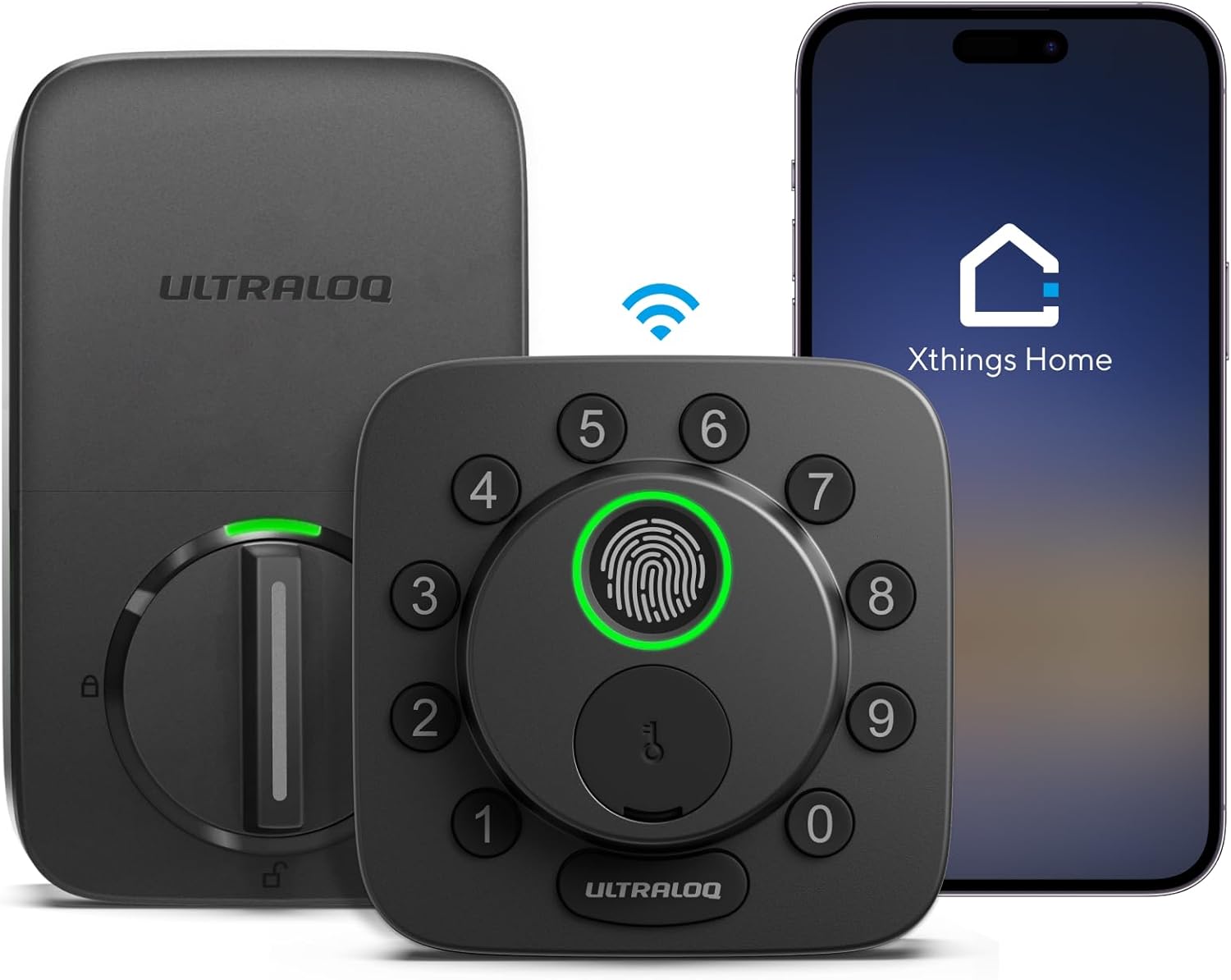
- Fingerprint reader works fast and stores many prints for multiple household members.
- Long battery life means fewer changes, keeping the lock reliable year-round.
- Fits standard doors and installs easily without tools beyond a screwdriver.
- Works with common smart home systems for remote control from anywhere.
- Weatherproof build holds up on exterior doors in rain or cold.
Cons
- Auto-lock relies on a timer, not a door sensor, so it may not relock if the door stays open.
- Batteries not included, so you need to buy four AA batteries right away.
- Matter mode requires a separate compatible hub for full smart home integration.
This deadbolt replaces your standard front door lock with options to enter using a finger scan, phone app, keypad code, voice from a smart speaker, or a backup key. For everyday homeowners, it simplifies coming home with arms full of groceries or packages by letting you tap your finger to unlock instead of fumbling for keys. The remote app control means you can let in a repair person or check if the door is secure while at work, reducing worry about forgotten locks.
Access sharing stands out for families or frequent visitors. Set codes that expire after a delivery window or guest stay, so you track who enters without handing out permanent keys. The auto-lock timer adds a layer of protection by securing the door shortly after you walk inside, ideal for keeping pets or kids safe without constant checking. Battery lasts up to 18 months on just four AAs, minimizing maintenance on your busiest exterior door.
Built tough with weather resistance, it handles rain and temperature swings on porches or gates. Data stays secure on the device itself, giving peace of mind that entry records aren't exposed online. While it integrates with smart home setups, the straightforward fingerprint and keypad make it reliable even if tech glitches, ensuring your home stays protected in real daily scenarios.
Overall, this lock fits renters or owners wanting keyless convenience without complexity, directly addressing front door vulnerabilities like lost keys or unauthorized entry during the day.
Installs on most standard exterior doors in about 10 minutes using only a screwdriver. No wiring or drilling into the wall needed, making it renter-friendly if your lease allows deadbolt changes.
- Check your door thickness (fits 1-3/8 to 1-3/4 inches standard).
- Requires a single-bore hole already in place from an existing deadbolt.
- Press any front button to activate Bluetooth for initial setup within 30 seconds.
- Four AA batteries needed (not included); insert before starting.
- Backup keys provided for emergencies if power fails.
Follow the included step-by-step guide for a secure fit that meets building standards.
Connects directly via built-in Wi-Fi for remote control without extra hubs, or switch to Matter mode for broader smart home linking. Use the app to lock/unlock from anywhere, view entry logs, and get alerts.
- Wi-Fi mode: Needs 2.4GHz home network within 70 feet; control via U-tec app for iOS/Android.
- Matter mode: Pairs with Apple Home, Google, Alexa using a Thread-compatible hub like a smart speaker.
- Share eKeys or codes for family, guests, or services with time limits.
- Works with voice assistants for hands-free entry when carrying deliveries.
- Web portal option for computer-based management.
Switch modes easily in the app after Bluetooth pairing; real-time notifications keep you informed on door activity.
Pros
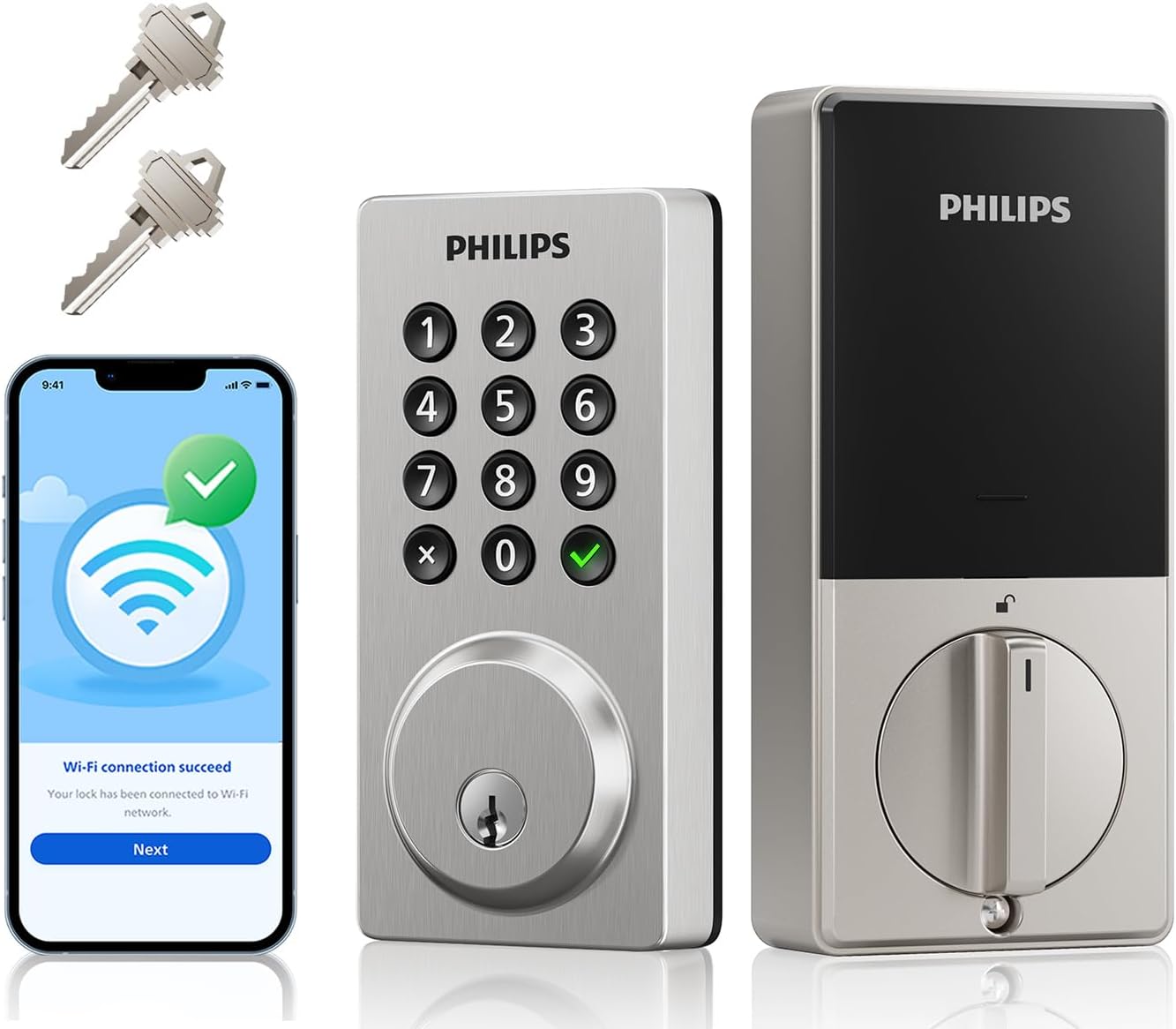
- Built-in WiFi connects directly to your router for app control without extra hubs
- Multiple passcode types fit family routines, guest stays, and service visits
- Local storage of entry logs keeps your access history private on the device
- Physical buttons stay reliable in bad weather unlike touchscreens
- Auto-lock and low-battery alerts prevent forgotten security lapses
Cons
- AA batteries not included, so plan to buy them for immediate setup
- App pairing relies on steady home WiFi, which can frustrate during outages
- Physical buttons may be hard to see clearly at night without extra lighting
This Philips WiFi smart deadbolt fits standard front doors and gives you control over entry without needing keys every time. You can unlock it remotely via app when a delivery arrives or let in a neighbor watching your house, reducing the stress of forgotten locks. Auto-locking after 10 to 180 seconds handles busy mornings when rushing out the door, while real-time alerts notify you of any access to keep tabs on your property.
For family homes, set permanent codes for trusted members and one-time passcodes for visitors like repair workers, making it simple to manage who comes and goes. The backup physical keys provide reliable access if power fails, and vacation mode disables codes entirely while you're away, securing the driveway gate equivalent on your main entrance. Entry logs stored locally let you review activity later without privacy worries.
Voice control with Alexa or Google works for hands-free locking after grocery runs, and the durable build holds up in rain or cold, fitting everyday porch monitoring needs. Silence mode keeps operations quiet during nap times, ensuring the lock supports your routine without disturbances. Overall, it addresses common gaps in manual locks for better peace of mind around deliveries and family safety.
Most homeowners complete setup in under 30 minutes with basic tools on standard doors. Check your door thickness from 1.38 to 1.75 inches and backset of 2.38 inches for a direct fit.
- Tools needed: Phillips screwdriver and possibly a drill for pilot holes.
- Replace existing deadbolt by unscrewing the old one; no wiring required.
- Works on exterior doors 2 to 3.15 inches thick; test hole alignment first.
- Download Philips Home Access app before starting for guided steps.
The app connects via your home WiFi for remote control, with no extra hub needed. Expect stable performance on common routers, sending instant entry notifications to your phone.
- Supports Alexa and Google for voice unlock during hands-free moments.
- Manage up to 100 passcodes: permanent for family, timed for guests.
- View local logs of all entries without cloud sharing.
- Low-battery warnings appear in-app before power issues arise.

Pros
- Multiple unlock methods cover common situations like wet hands or gloves at the door.
- Rechargeable battery supports long-term use without frequent replacements.
- Auto-lock feature helps secure the home after entry or exit.
- Works with existing Apple devices for hands-free access in daily routines.
Cons
- UWB and remote features require a compatible Apple hub and specific devices.
- Fingerprint recognition may struggle with faint prints from children or elderly users.
- Basic functions only available via Bluetooth without a Matter controller.
The Aqara U400 provides a deadbolt option for the front door that unlocks as you approach with supported Apple devices. This setup helps when carrying groceries or managing children, allowing entry without pausing to handle keys or phones.
Family access works through shared options that let multiple people use the door without extra physical keys. It supports scenarios like visitors arriving for short periods or service workers needing timed entry at the main entrance.
Backup methods such as codes or fingerprint add reliability for situations where the primary approach is not available. The rechargeable battery reduces interruptions at outdoor doors exposed to daily use.
Auto-lock activates after closing to maintain security around the property, including side or rear entries. This keeps the focus on consistent protection without constant manual checks.
This lock fits standard deadbolt doors but requires checking door thickness and alignment first. A Thread-enabled Apple hub is necessary for full UWB and remote features during setup.
- Place the hub within range of the door for stable connection.
- Ensure the door frame allows proper deadbolt extension for security.
- Test basic Bluetooth pairing in the app before adding advanced options.
The Aqara app handles basic setup and code management over Bluetooth when no hub is present. Full features like remote access need a compatible Matter controller on the network.
- Enable IPv6 on the home Wi-Fi for stable linking.
- Keep the phone near the lock during initial pairing steps.
- Use the app to create timed codes for visitors or deliveries.

Pros
- Multiple entry methods reduce issues with lost keys for family use
- App shows entry logs to track who accessed the door and when
- Fits standard doors with basic tools and reversible handle
- Auto-lock feature prevents leaving the door unsecured after exit
Cons
- Full remote access requires a separate gateway purchase
- Battery replacement is needed after roughly one year of use
- Fingerprint sensor can fail to read in cold or wet conditions
This lock supports keyless entry on front doors so family members can come and go without physical keys. It handles common situations like kids returning from school or deliveries being brought inside by authorized users.
Access options include fingerprints and codes that work for elderly residents or parents carrying items. The system records entries to help monitor activity around the property during the day.
Auto-lock engages after departure to keep the home secure without extra steps. Weather resistance allows reliable function on exposed doors through varying temperatures.
Timed codes suit short-term visitors such as service workers while permanent codes fit regular household users. The design focuses on straightforward daily operation rather than complex setups.
This lock fits most standard doors without extra drilling and takes only basic tools for setup. The handle reverses for left or right swing doors.
- Check door thickness and backset before purchase to confirm fit
- Four AA batteries power the unit for about a year
- Optional gateway mounts nearby for remote features
The app manages user codes, fingerprints, and entry records from a phone. Remote control works only when the separate gateway is added.
- Create one-time or recurring codes for visitors
- Review access logs to see door activity
- Connect to voice assistants for basic commands
Buying Guide for Smart Locks For Home Assistant
Connecting a smart lock to Home Assistant takes a little more planning than picking any Wi-Fi lock off a shelf. The integration layer matters as much as the hardware, and a few key details will save you from a setup that works half the time. Here are the things worth checking before you buy.
Integration Method and Protocol
Not all smart locks talk to Home Assistant the same way, and some rely on a cloud bridge that breaks every time the manufacturer has an outage. A lock that connects over Z-Wave, Zigbee, or a direct local API is far more dependable than one that requires a third-party cloud relay.
Check whether your target lock has a native Home Assistant integration or a well-maintained HACS option. Locks built for easy DIY installation often document their integration steps clearly, which matters as much as the physical setup.
Entry Methods and Fallback Access
A lock that fails to connect should still let you in, and a good Home Assistant lock gives you at least one reliable offline entry method. Fingerprint, keypad, and physical key backup cover you when automations are not responding.
Think about who else needs access regularly. If you have guests or family members who will not use the app, fingerprint deadbolts let you enroll prints once and skip the code-sharing entirely.
Battery Life and Monitoring
Running a lock through Home Assistant means you can set up low battery alerts, but that only helps if the lock reports its status accurately and often enough to be useful.
Look for a lock with a rated lifespan above six months on a standard set of batteries and one that surfaces its charge level clearly in Home Assistant. Smart locks with longer battery life are worth prioritizing if you run automations frequently, since polling can drain faster than idle use.
Lock and Door Compatibility
A new smart lock still has to fit your existing door hardware, and a mismatched bore hole or backset wastes time. Some locks also require specific deadbolt configurations that are not obvious from the product listing.
Measure your door before ordering and confirm the lock’s backset and cross-bore match your current setup. Euro-profile doors are a specific case worth calling out since most US deadbolts will not fit them at all.
Voice and Automation Scope
Home Assistant is the hub, but how well the lock plays with voice assistants and broader routines still varies. Some locks expose more entities and attributes than others, which affects what you can actually automate.
Think about whether you want simple lock and unlock commands or deeper status-triggered automations. Smart locks compatible with Alexa often have the broadest voice command support, which can complement your Home Assistant setup without replacing it.
Once you know which protocol fits your network and which entry methods suit your household, the right choice tends to narrow down quickly. The rest is matching the feature set to the automations you actually plan to run.
Why You Should Trust Us
Safe Home Upgrade is a research-based home security publisher. We do not receive products from manufacturers and we do not handle or install the locks we cover. Our process involves reviewing manufacturer specifications, analyzing verified buyer feedback, cross-referencing safety certifications including BHMA and ANSI ratings, and comparing how each product performs against the real conditions U.S. homeowners face.
Each product in our roundups is scored using the SHU Score, a structured evaluation framework that weighs connectivity, access method redundancy, app reliability, build quality, and integration depth. The goal is to surface the options that hold up in daily use, not just the ones with the longest feature list on the box.
Final Thoughts
There are a lot of solid options in this category, and honestly most of them will get the job done if your Home Assistant instance is reasonably current. Where things start to differ is in how the lock connects and how much you can do locally without relying on a cloud relay.
The ULTRALOQ Bolt SE Smart Deadbolt suits anyone who wants fingerprint convenience alongside real smart home integration. You get a fast, reliable way in every day and the kind of connectivity that holds up once it is wired into your automations.
Frequently Asked Questions
Can you use a smart lock without a hub?
Many smart locks connect directly over Wi-Fi and require no hub at all. Locks using Matter over Thread are the exception, since those need a Thread border router to enable remote access.
Do smart locks work when the Wi-Fi goes down?
Local access methods like fingerprint, keypad code, and physical key still work without Wi-Fi. Remote control and voice assistant commands through the cloud will not function until the connection is restored.
Is it better to get a lock with built-in Wi-Fi or one that uses Bluetooth?
Built-in Wi-Fi allows remote access from anywhere, while Bluetooth-only locks require your phone to be nearby. For full remote control and voice assistant integration, built-in Wi-Fi is the more practical choice for most front doors.
How do smart locks handle guest or temporary access?
Most smart locks let you generate time-limited or one-time access codes through the app. You can set a code that expires after a single use or within a specific date range, without needing to be home. For more on managing access across properties, the fingerprint smart lock options cover multi-user setups in detail.
Are smart locks secure enough for a front door?
BHMA-certified smart locks meet the same physical security standards as traditional deadbolts. The main additional consideration is keeping the lock’s firmware updated and using a strong, unique app password to protect remote access.
Write Your Review
No reviews yet. Be the first to share your experience!