

Handing out door codes you never revoke, or keys that get copied without your knowledge, has a way of becoming a real problem. Package deliveries, house guests, and family schedules make the front door one of the harder things to stay in control of.
A dedicated WiFi deadbolt solves that by letting you manage access from your phone and see who came and went, without touching the lock. We went through the current lineup of best Schlage smart locks to find the ones that connect reliably and hold up in daily use.
Our overall pick for best Schlage smart locks is the Schlage Encode WiFi Deadbolt. It connects directly over WiFi so you can handle remote access for deliveries and family from anywhere, which means you stop guessing and start knowing who actually used the door. Check out our top picks below to find the right fit for your setup.
Our Top Picks

Pros
- Installs quickly using only a screwdriver on most doors.
- Allows remote lock checks without extra hubs or wiring.
- Supports up to 100 codes for different household members.
- Auto-lock feature prevents leaving doors unsecured overnight.
Cons
- Requires steady home WiFi for remote features to work.
- Battery changes needed every six months on average.
- Lever style offers less forced entry resistance than deadbolts.
This lever lock delivers reliable remote access for side doors and interior spaces where frequent entry happens. It connects directly to home WiFi so you can check status or grant codes from anywhere without extra devices.
The app handles scheduling and history viewing well for scenarios like managing contractor visits or monitoring after-school arrivals. Interior levers suit home offices or guest areas where physical keys become inconvenient.
One drawback is the need for consistent WiFi, since spotty connections block remote commands and alerts. Battery life also means occasional replacements to avoid lockouts.
I recommend it most for homes with multiple entry points that need basic app control rather than maximum physical strength.
This lock fits standard doors between 1-3/8 and 1-3/4 inches thick. It works on both right and left handed setups without extra parts.
- Replace an existing lever on a wood-frame side door in under 30 minutes using a screwdriver.
- New installs on interior home office doors require only pre-drilled holes matching the 2-3/8 or 2-3/4 inch backset.
- Avoid apartment metal doors unless you confirm the latch aligns properly first.
- Always test the backup key before relying on batteries during power issues.
Pros
- Remote app control works from anywhere to manage front door access
- Built-in alarm detects door tampering for added break-in protection
- Fits most standard doors and installs with just a screwdriver
- Up to 100 access codes simplify sharing for cleaners or neighbors
- Voice control with Alexa or Google for hands-free locking
Cons
- Requires reliable WiFi signal at the door for remote features to work
- Batteries need replacement every few months depending on use
- Touchscreen can smudge over time and needs occasional cleaning
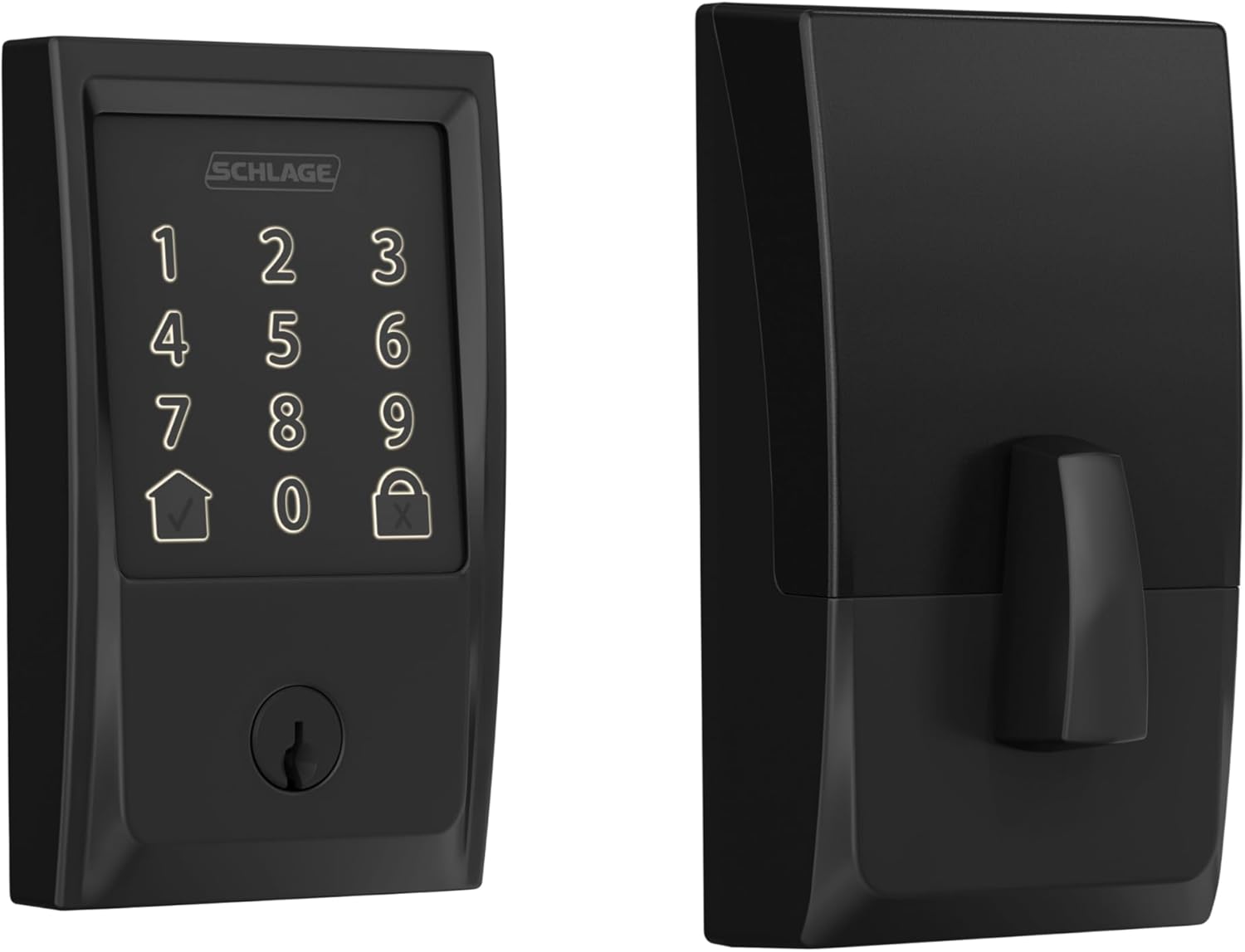
This Schlage Encode deadbolt replaces your standard front door lock with keyless entry via touchscreen or app. It connects directly to your home WiFi, so you can lock or unlock from anywhere, which gives peace of mind when deliveries sit on the porch or family arrives while you're out. The built-in alarm sounds if someone pries at the door, alerting you to potential break-ins before they happen.
For everyday routines, set auto-lock to relock the door minutes after it opens, preventing forgotten locks when kids head to school or guests use the backyard gate. Track who entered and when through the app, helping you verify if the dog walker came by or if packages were safe. One-touch locking from outside makes leaving for work quick and secure without fumbling keys.
With a backup physical key and long-lasting batteries, it handles outages or low power without leaving you locked out. The fingerprint-resistant touchscreen stays readable for repeated use, and it pairs with voice assistants for hands-free control near the driveway. Overall, it strengthens front door security for homeowners focused on family safety and property monitoring.
Durability holds up to daily wear, fitting standard doors without modifications. This setup reduces reliance on spare keys hidden outside, cutting risks from theft while enabling flexible access for trusted visitors.
Most homeowners complete setup in under 30 minutes with basic tools. It fits doors 1-3/8 to 1-3/4 inches thick and standard backsets of 2-3/8 or 2-3/4 inches, covering typical front or side entry doors.
- Just a screwdriver needed; no wiring or drilling extras required
- Includes mounting plate, strike plate, screws, and four AA batteries to start immediately
- Snap-and-stay design holds parts in place during install for easier solo work
- Remove old deadbolt first; test on interior doors if unsure about fit
Backup key works right away post-install for front porch security testing.
The Schlage Home app connects via your home WiFi for control without extra hubs. Use it to manage front door access from your phone anywhere with internet.
- Lock or unlock remotely to secure deliveries or let in repair workers
- Create and schedule up to 100 codes for family, guests, or cleaners
- View entry history and get alerts for low battery or door activity
- Customize auto-lock timing to fit your routine, like after kids enter
- Works with Alexa or Google for voice commands near the driveway
Needs steady WiFi at the door; app notifications help monitor vacation home entry.

Pros
- Controls the lock remotely without buying a separate hub.
- Alerts you to door tampering attempts right away.
- Fits most standard residential doors with simple tools.
- Allows up to 100 unique entry codes for different people.
Cons
- Requires a steady home WiFi signal to work remotely.
- Needs battery changes every several months.
- Touchscreen may be difficult to use in low light.
The Schlage Encode deadbolt gives homeowners direct remote control over their front door entry. It connects straight to your home WiFi so you can manage access without extra devices.
This setup helps when monitoring package deliveries at the porch or confirming the door after kids get home from school. The built-in alarm adds protection against break-in attempts at the main entrance.
It depends on your home WiFi staying connected for full app features to function. Battery life lasts several months under normal use.
This lock suits owners of standard single-family homes who want straightforward remote door management.
Installing this deadbolt works on most standard residential doors between 1-3/8 and 1-3/4 inches thick. It replaces existing deadbolts or fits new setups with basic tools.
Measure door thickness and backset before starting to avoid issues on wood or metal frames. Apartments with thin doors may need adjustments while houses often install directly.
- Use a screwdriver only for the full process on replacement jobs.
- Confirm WiFi reaches the door location for remote features after install.
- Test the fit on rental properties before permanent mounting.
- Keep the backup key accessible during initial setup.

Pros
- Installs in minutes using only a screwdriver
- Controls remote lock status through the app
- Supports multiple codes for household members
- Works with voice assistants for hands-free use
Cons
- Remote features need a steady WiFi connection
- Batteries require replacement every six months
- Touchscreen can collect fingerprints over time
This lever lock gives homeowners direct control over entry points on secondary doors like side entrances or offices. It connects straight to home WiFi for app monitoring without added devices.
It handles common situations such as setting access for deliveries or family members coming through a mudroom. I can assign codes that expire after use to keep shared spaces secure.
Worth noting before buying: full remote functions stop working if the WiFi drops. This limits reliability in areas with signal issues.
It suits homes with standard interior doors needing basic keyless options for frequent traffic.
This lock fits most standard doors from 1-3/8 to 1-3/4 inches thick. It works on both right and left handed setups without extra parts.
- Use a screwdriver for a full install in under 30 minutes on wood or metal frames.
- Replace an existing lever by removing old hardware and aligning the new backplate.
- Check door backset measures 2-3/8 or 2-3/4 inches before starting.
- Insert four AA batteries after mounting to power the touchscreen and WiFi.
Apartment renters should confirm lease rules allow drilling before swapping levers on rental doors.

Pros
- Installs in minutes using only a screwdriver on standard doors.
- Sends app alerts for lock activity while away from home.
- Keeps codes active without WiFi for basic use near the door.
- Offers one-touch locking from outside for quick exits.
Cons
- Requires home WiFi for full remote app control.
- Needs battery changes every few months with regular use.
- Fits only standard door thicknesses from 1-3/8 to 1-3/4 inches.
This Schlage Arrive deadbolt delivers practical remote control for homeowners who need to manage front door access without keys. The built-in WiFi connects directly to the app so I can check status and adjust codes from anywhere.
It handles common situations like securing the house after deliveries arrive or granting temporary entry to pet sitters through scheduled codes. The auto-lock feature reduces the chance of leaving the door open during rushed mornings.
Worth noting before buying: full remote functions stop if the WiFi drops though basic keypad use continues on batteries. The main trade-off is dependence on a stable home network for alerts.
This lock suits owners of standard single-family homes replacing an existing deadbolt who want simple app oversight without extra hubs.
Replacing an existing deadbolt on a standard front door takes only a screwdriver and follows the included steps for most wood or metal setups. New installations require drilling precise holes that match the 2-3/8 or 2-3/4 inch backset.
Apartment renters should confirm landlord approval since the lock replaces the original hardware. Wood-frame homes allow easier swaps while metal doors may need extra alignment checks.
- Confirm door thickness falls between 1-3/8 and 1-3/4 inches before purchase.
- Use the backup key during initial setup to avoid lockouts.
- Align the strike plate properly on the frame for smooth operation.
- Test the keypad after install to verify all codes function.

Pros
- Controls the lock remotely without extra hubs or bridges.
- Installs in minutes using only a screwdriver on standard doors.
- Built-in alarm notifies of door movement or tampering.
- Works with voice assistants for hands-free lock commands.
Cons
- Needs steady home WiFi for remote features to work.
- Battery replacements required several times per year.
- Higher cost than basic non-connected deadbolts.
This deadbolt delivers straightforward remote control over your front door through the app and built-in WiFi.
It handles common situations like monitoring deliveries or granting entry to kids after school without needing to be home. The auto-lock function and entry alerts add reliable coverage for daily routines around the property.
The main trade-off is its full remote use depends on consistent WiFi performance at the house. Worth noting before buying, battery life requires periodic attention in real homes with frequent use.
Homeowners with Apple devices or frequent visitors will find it fits well for practical front door management.
New installs on wood-frame doors go smoothly with the snap design that holds parts in place. Replacement jobs on existing deadbolts typically need only a screwdriver and take under thirty minutes.
- Check door thickness between 1-3/8 and 1-3/4 inches before starting.
- Measure backset to confirm 2-3/8 or 2-3/4 inch fit on your door.
- Apartment renters should verify landlord rules on modifications first.
- Wood doors accept the hardware directly while metal may need extra prep steps.
Buying Guide for Best Schlage Smart Locks
Schlage has been making residential locks long enough that their deadbolts carry a reputation most smart lock brands are still building toward. The features worth focusing on are the ones that affect how the lock fits your door, your home network, and your daily routine. Here are the key things worth checking before you buy.
Direct WiFi vs Hub Required
A WiFi deadbolt that requires a separate hub adds a dependency that can break your access when the hub goes offline. Some locks also only work with specific smart-home platforms, which limits your options later.
Schlage Encode models connect directly over your home WiFi, and the app works without any additional hardware. If you already run Alexa in the house, locks built for Alexa voice control let you lock up with a simple voice command without pulling out your phone.
Access Logs and Code Management
A keypad lock with no access log makes it hard to know whether an entry was you, a family member, or someone who should not have had the code. This matters in households where multiple people come and go at different hours.
Look for a lock that stores entry timestamps and lets you create unique keypad codes per person. Individual codes with an activity log keep you in control without requiring a camera on the door.
Battery Life and Power Backup
Battery life on a WiFi deadbolt tends to run shorter than on Bluetooth-only locks because the radio draws more power. Cold winters make this worse, and a dead battery without a physical key backup creates a real problem at the door.
Check the rated battery life for your climate and confirm whether an emergency power option is available. If you prefer not to swap batteries frequently, models with longer battery life handle high-traffic doors more comfortably.
Installation and Door Fit
Not every Schlage deadbolt installs the same way, and misreading the backset measurement or ignoring the existing door prep can turn a straightforward swap into a frustrating afternoon. Most Schlage locks are built for standard door prep, but it pays to confirm before you order.
Measure your door’s backset and check whether the lock requires a specific bore hole size. If you want the whole job done with a screwdriver and no locksmith, picking one of the models designed for easy DIY installation keeps the process simple.
Once you have matched the lock to your door prep, your network, and the way your household manages access, the rest of the decision tends to sort itself out quickly.
Final Thoughts
There are a lot of solid options in this category, and honestly most of them will get the job done. The real split is between buyers who need deeper smart-home control and those who just want reliable keypad and remote access without a complicated setup.
For the second group, the Schlage Encode WiFi Deadbolt is the straightforward choice. It gives you remote access and a built-in alarm without requiring a hub or a steep learning curve, so most households can set it up and move on.
FAQs
Do Schlage smart locks require a separate hub for remote access?
Schlage smart locks with built-in Wi-Fi connect directly to home networks for remote use without any hub. This holds when the router signal reaches the door location reliably. Direct setup reduces extra devices that could fail during power issues. Check signal strength at the door before final installation.
How many access codes can these locks store?
Most Schlage models store between 100 and 250 unique codes depending on the exact version. This capacity covers typical family and visitor needs without frequent resets. Code limits become relevant for households that issue temporary access often. App management makes adding or removing codes quick from any location.
Is it better to choose a deadbolt or lever version for side doors?
Lever versions fit side doors that see frequent use because they operate more easily with one hand. Deadbolts remain stronger for primary entry points facing the street. Match the style to door hardware already installed to avoid extra modifications. Both types share the same Wi-Fi and app features in the Encode line.
Can battery life drop faster in cold weather?
Battery performance shortens in extreme cold because lower temperatures reduce chemical output inside cells. Expect earlier low-battery alerts during winter months on exposed doors. Keep spare batteries on hand and monitor app notifications for advance warning. Indoor doors show longer average life than exterior ones.
What happens if the Wi-Fi network goes down?
Locks continue to accept manual codes and keys even without Wi-Fi so entry stays possible. App features pause until the network returns. Auto-lock timing still functions locally during outages. This separation keeps basic security intact regardless of internet status.
Write Your Review
No reviews yet. Be the first to share your experience!